I was intrigued by the concept of using steam power to traverse and elevate heavy coastal guns but on reflection I will see what I can find out about that subject.
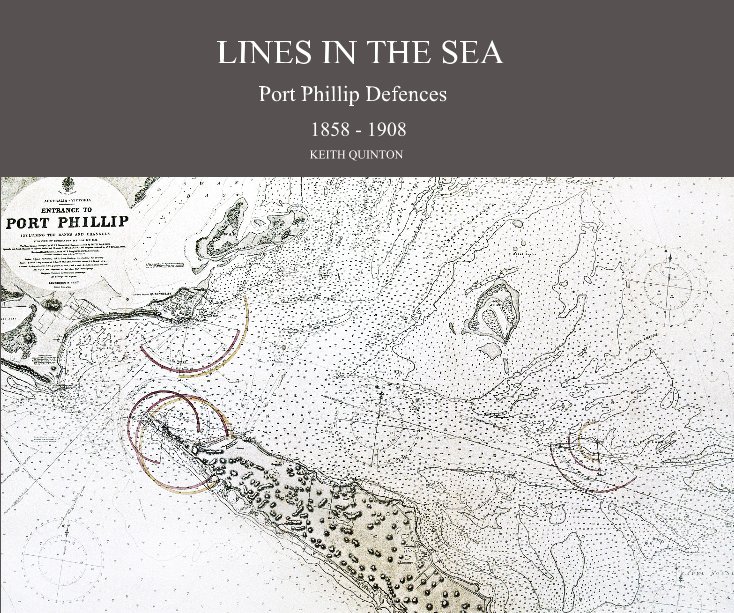
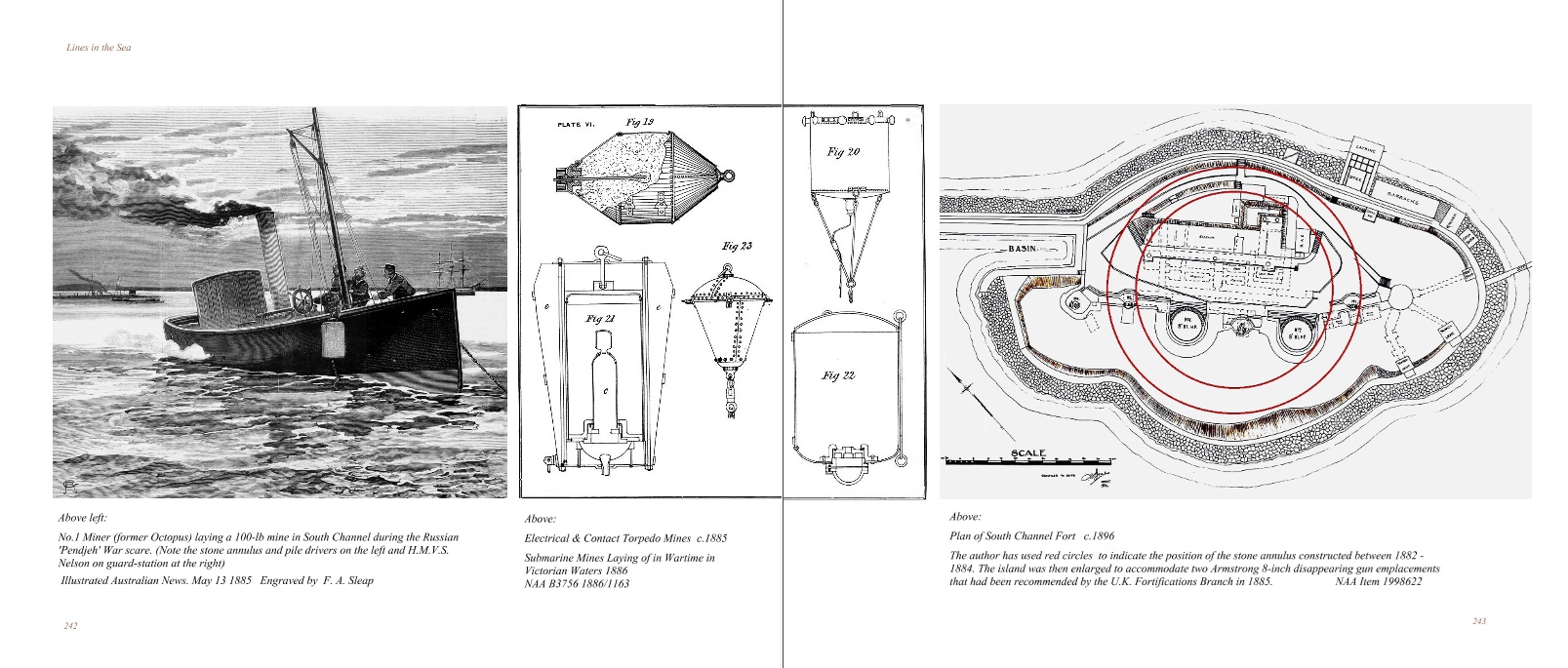
I have a little book about Artillery Steam engines but there is nothing in that of interest. It was interesting to read about the renewal of the Torpedo Corps and the different methods and types of “torpedoes” and the raising of a Naval Militia. The fort at Swan Island covering the Western Channel was one that I knew about but had no details of it and also South Channel lacked detail despite sailing past it on numerous occasions from Blairgowrie.
Chapter 1
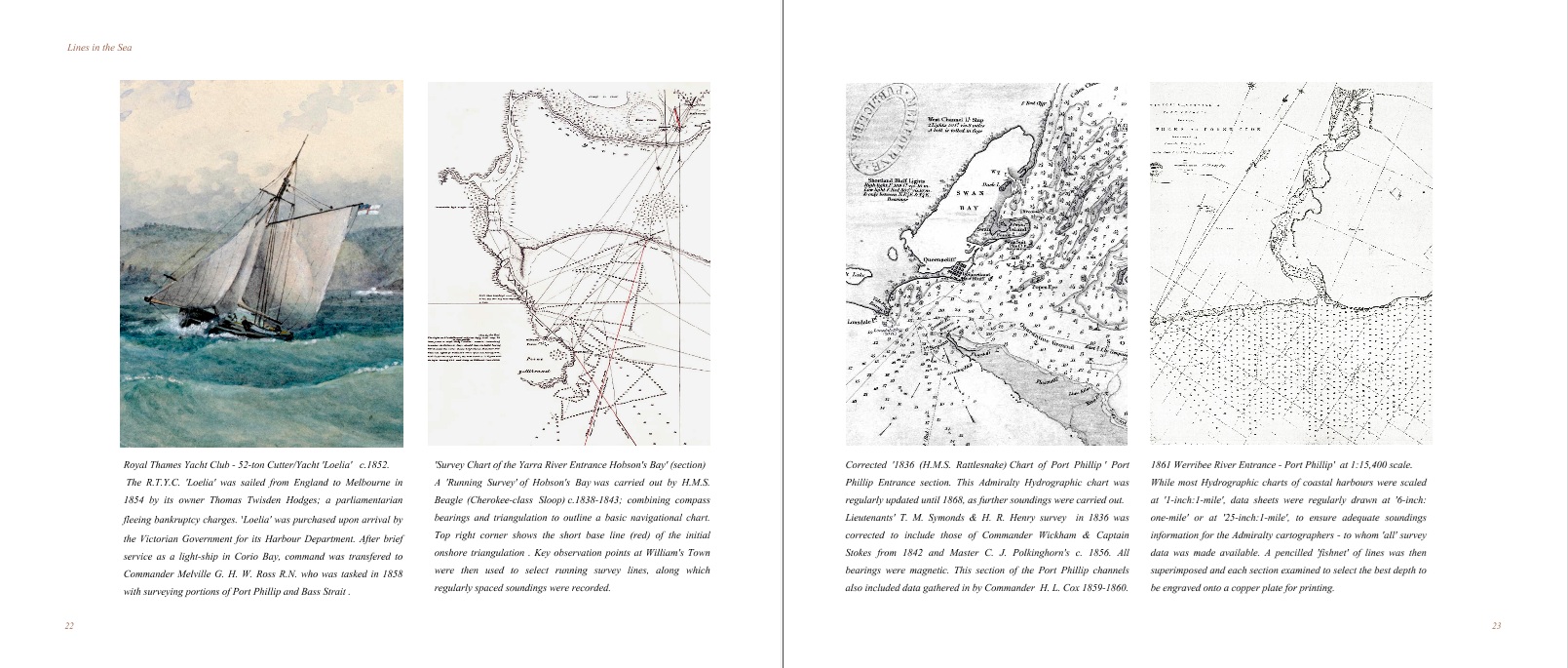
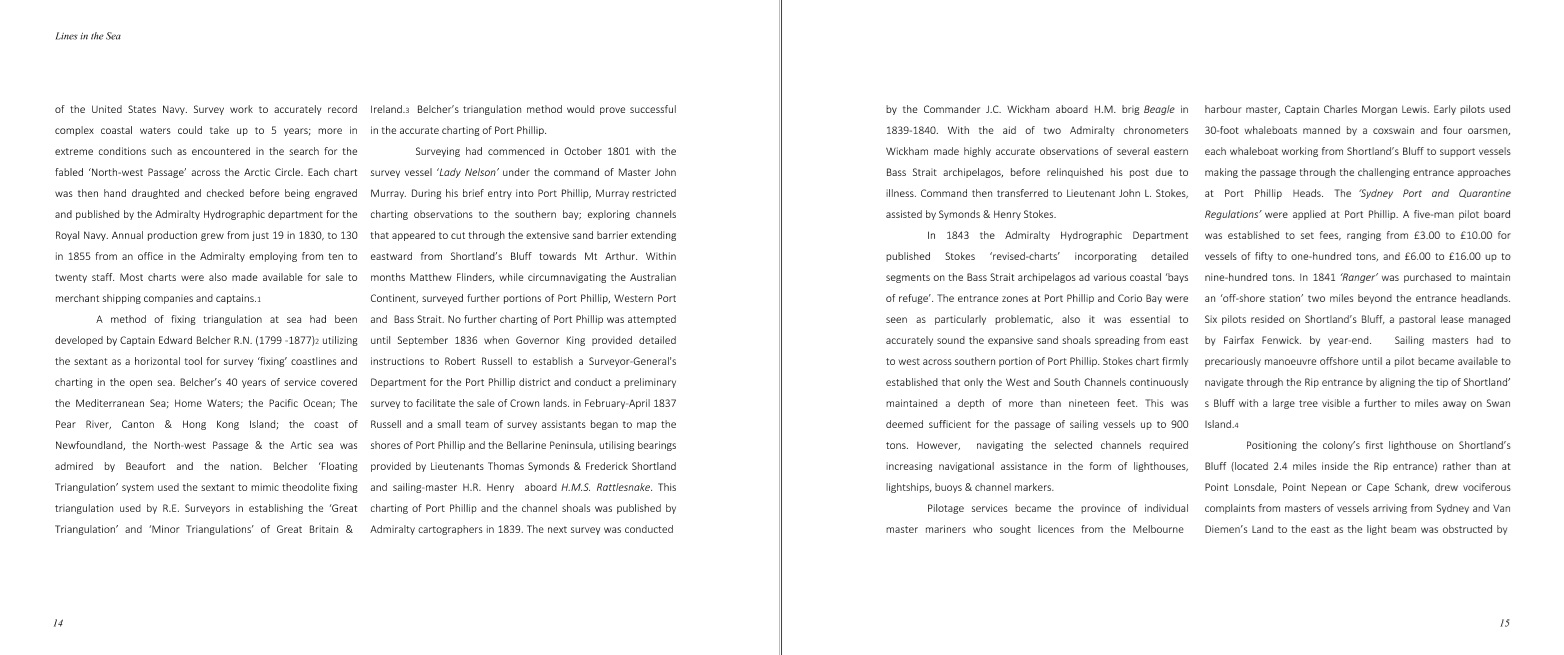
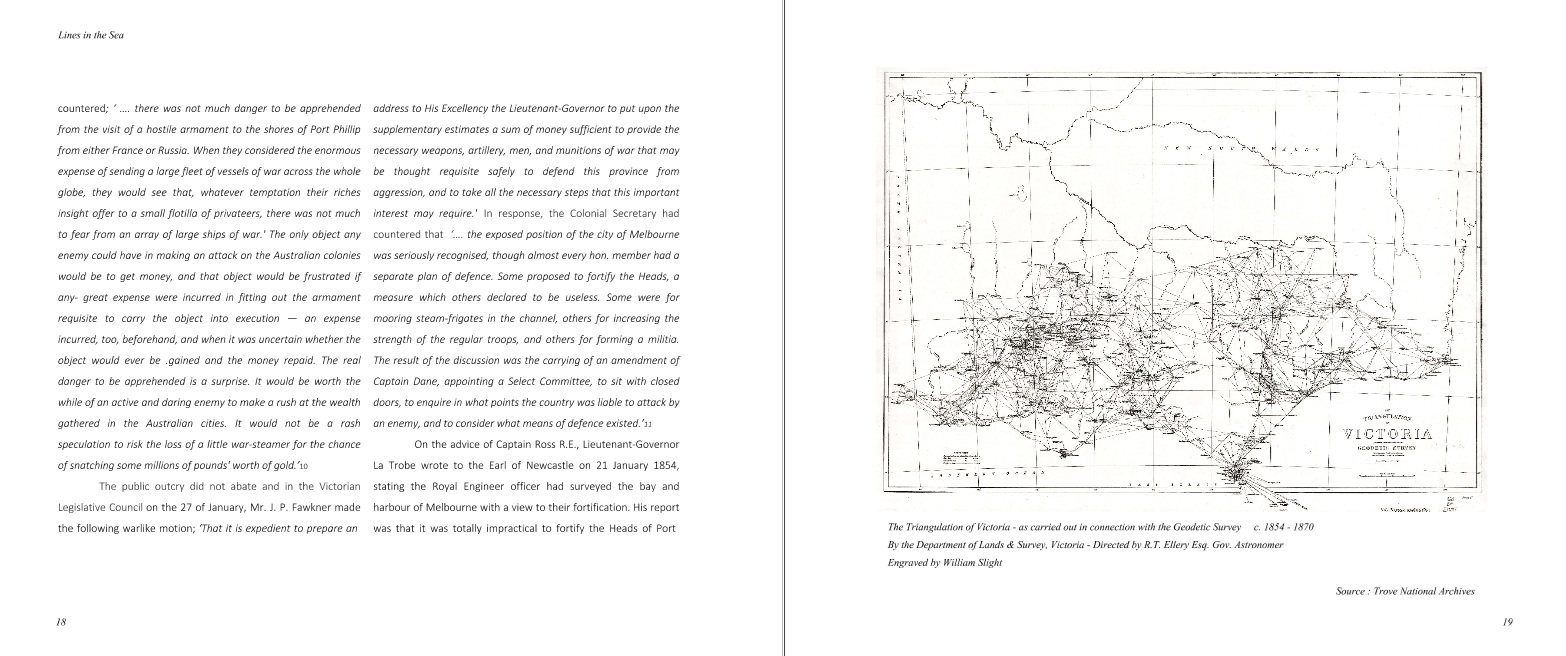
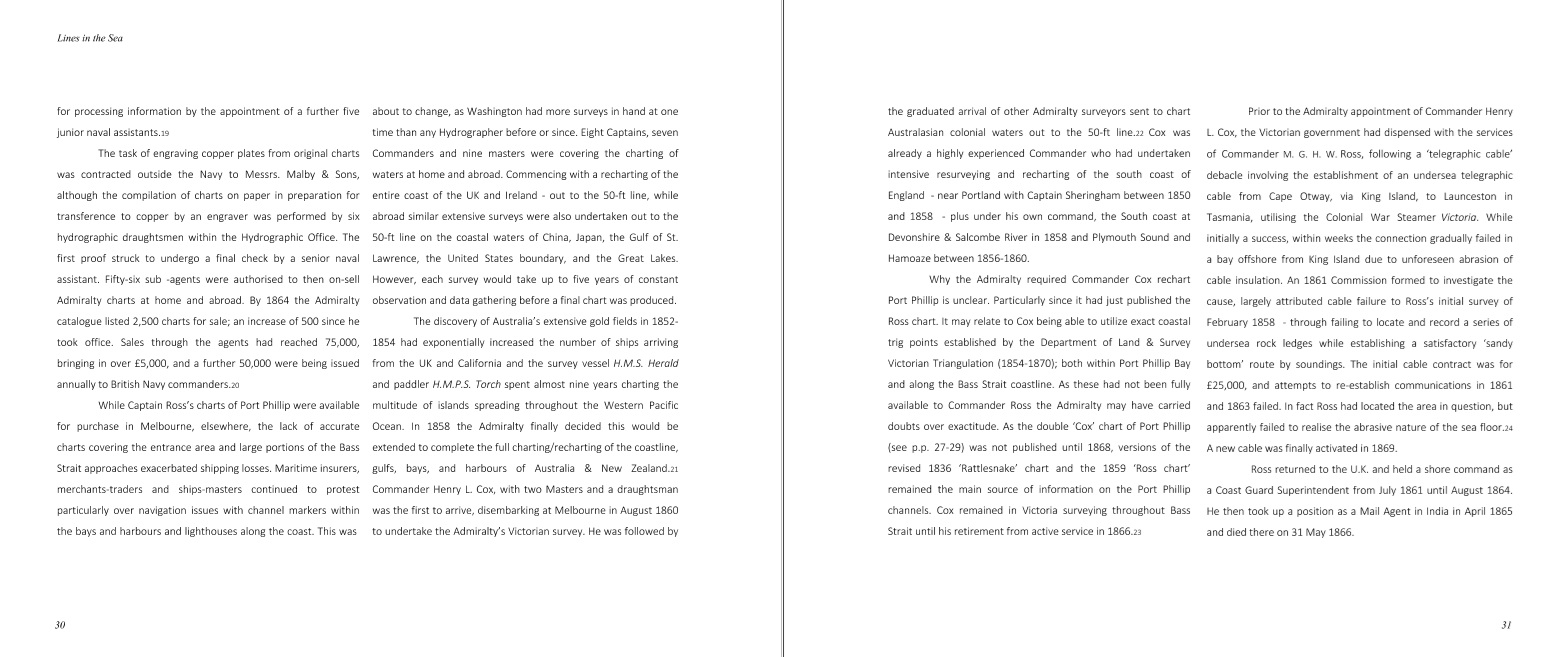
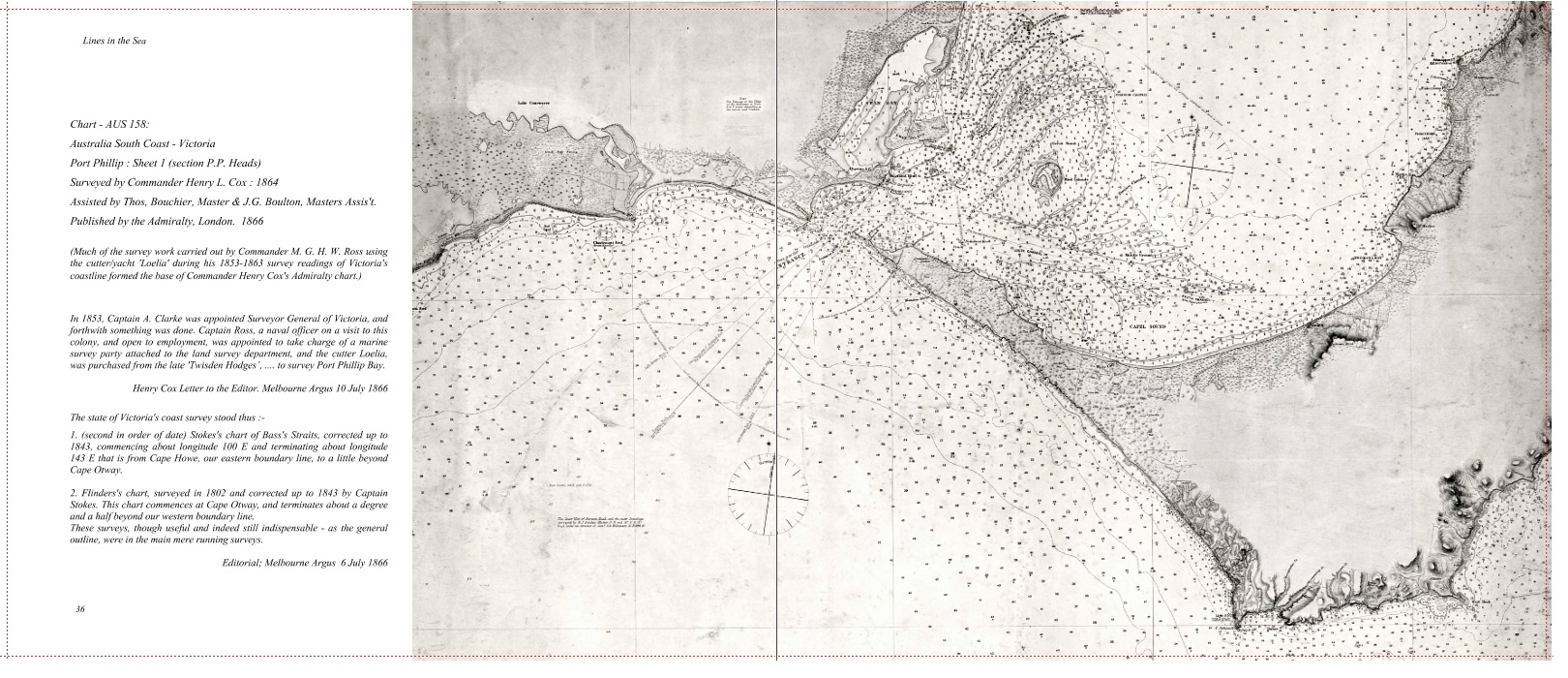
Earlier on in your book the large number of hydrographic surveys was of great interest as I had to study such surveying during my time as a Cadet Surveyor.
Chapters 2 – 8
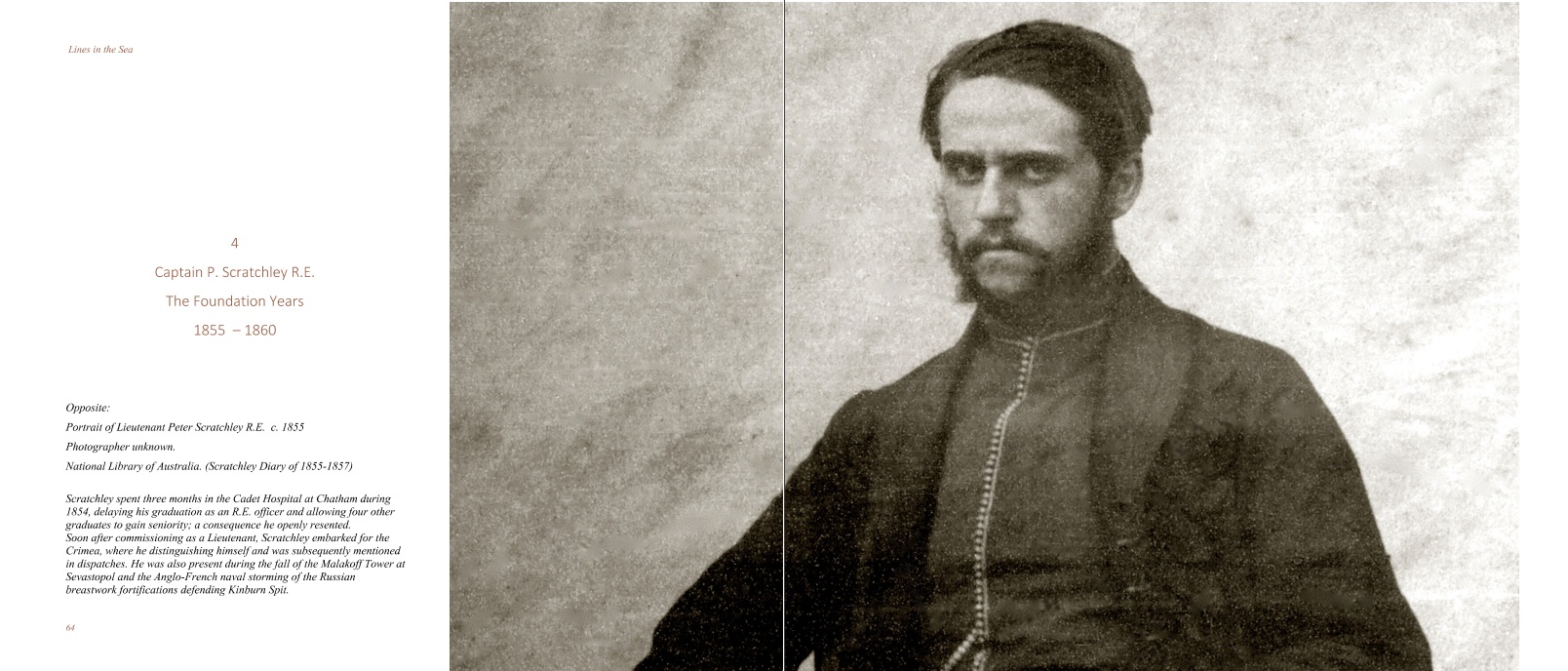
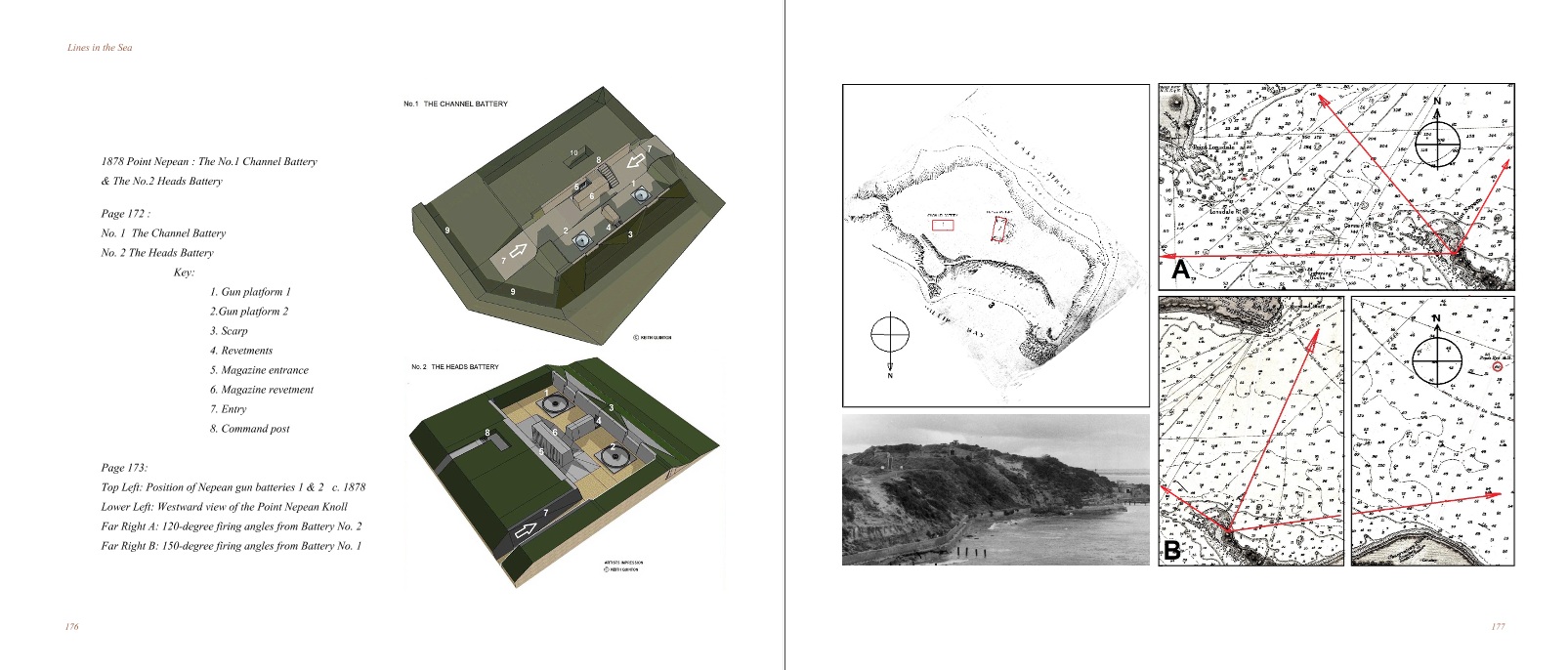
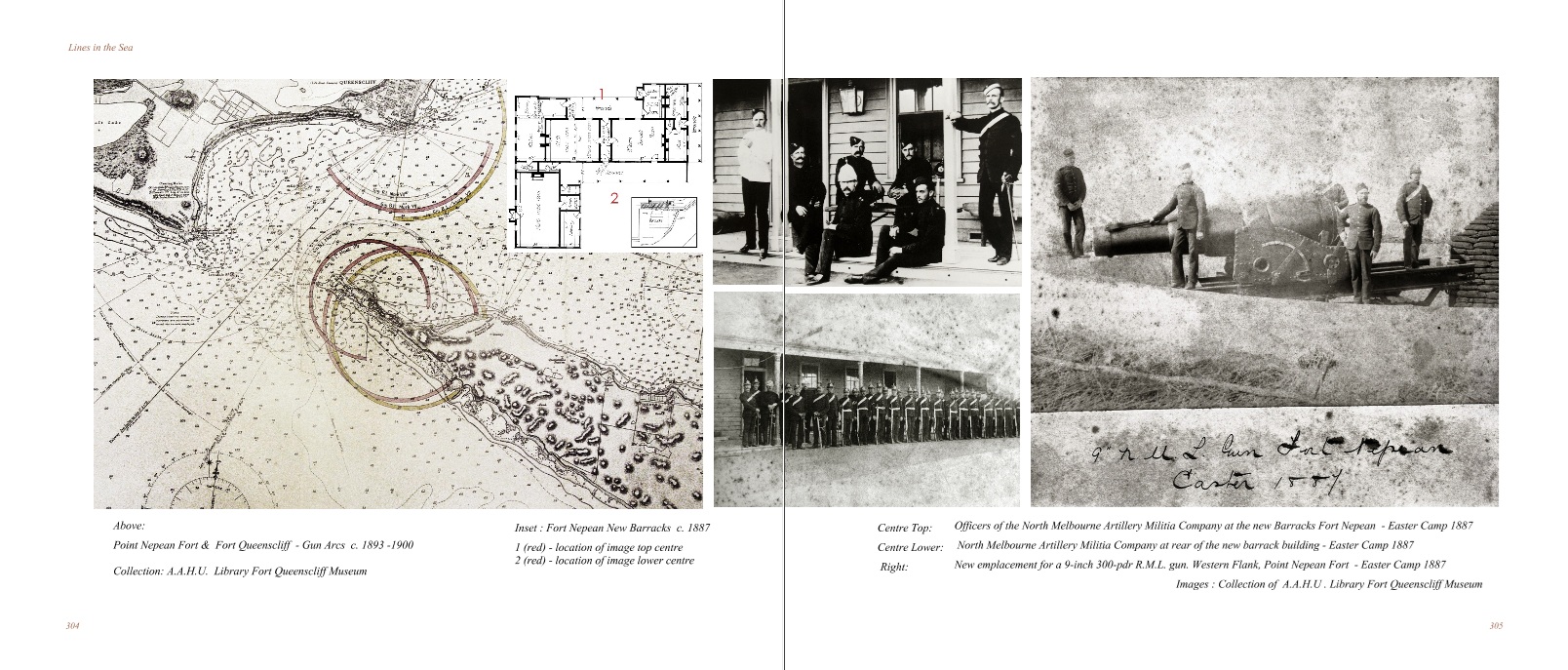
I was amazed at the many plans that were considered over the years and it is most interesting but it left me very curious. There seemed to be a series of “specialists” in the many facets of coast defences and as a result I jotted down some points which of course are being wise after the event. Some of these jottings display several matters that don’t seem to have been coordinated by any of the experts who were involved. I might add that I was disappointed that the R.E. officer advisers were specialists in different fields and ignored to some extent the geography, the various hydrographic surveys, the “three headlands and two channels, sea current flow, maximum gun ranges, time taken between guns firing versus enemy speed, impact of “overshoots” on opposite land and being mesmerised on fortifications.” It seemed to me that all of these jottings were not always taken into account when considering each defence plan. Why this did not happen I do not understand given the extensive technical education at the Royal Military Academy which was the first and only specialist college in the U.K. for some years, and where R.A. and R.E. cadets did the same course. The introduction of Torpedo mine defences and contribution of General Sir William Jervois and Colonel Scratchley after 1878 is dealt with in considerable detail in chapters 8 and 9.
Chapter 10
It would seem that Victoria finally had a Defence scheme after much hesitation. The slowness in reaching a decision was not much different from the procedures in South Australia. In fact, today’s Commonwealth Governments and their ability in reaching any decision is similar. The same factors of finance, lack of understanding of Defence matters, ignorance, and too many expert advisors in coastal defence of harbours. Of course, ignorance of the capabilities of guns and gunnery did not help. I had not come across Crossman in his capacity and must do some research into him. All in all, I have found Chapter 10 to be a most interesting and educational chapter and no doubt I will go back to it from time to time. It is very well written.
Chapter 11
It seemed to me that Victoria was now starting to have a Defence Scheme at long last. The combination of guns, defensive war vessels from a range of sources and torpedoes/mines is very interesting. Tidal influence and deep channels is now being taken into account. The testing of guns for Victoria in the Solent is now being taken seriously in the UK. Changes to gun design and calibre is continuing to be a problem because gun emplacements are also affected. Several guns considered were either in service or still at the experimental stage. Each type of gun also had different characteristic which did not help in the selection process.
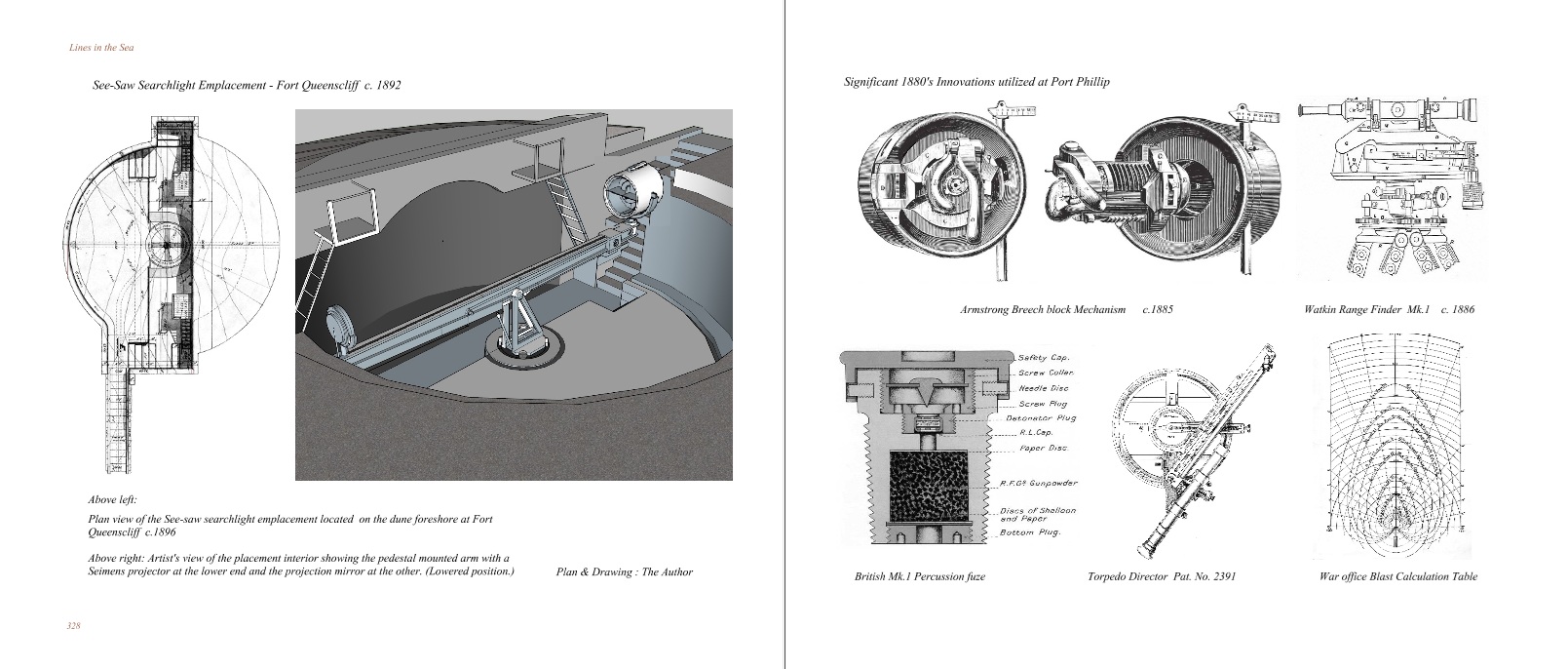
The introduction of H.P. gun mountings is something new to be considered. Similar H.P. mounted guns were emplaced at Fort Largs. The war scare between the U.K. and Russia had been a good thing as it sped up trials of guns and mountings. Another very interesting Chapter and a great read. Chapter 11 was also very interesting particularly as my unit in Darwin had two 150cm searchlights for use against enemy motor torpedo boats!!!!!
Chapter 12
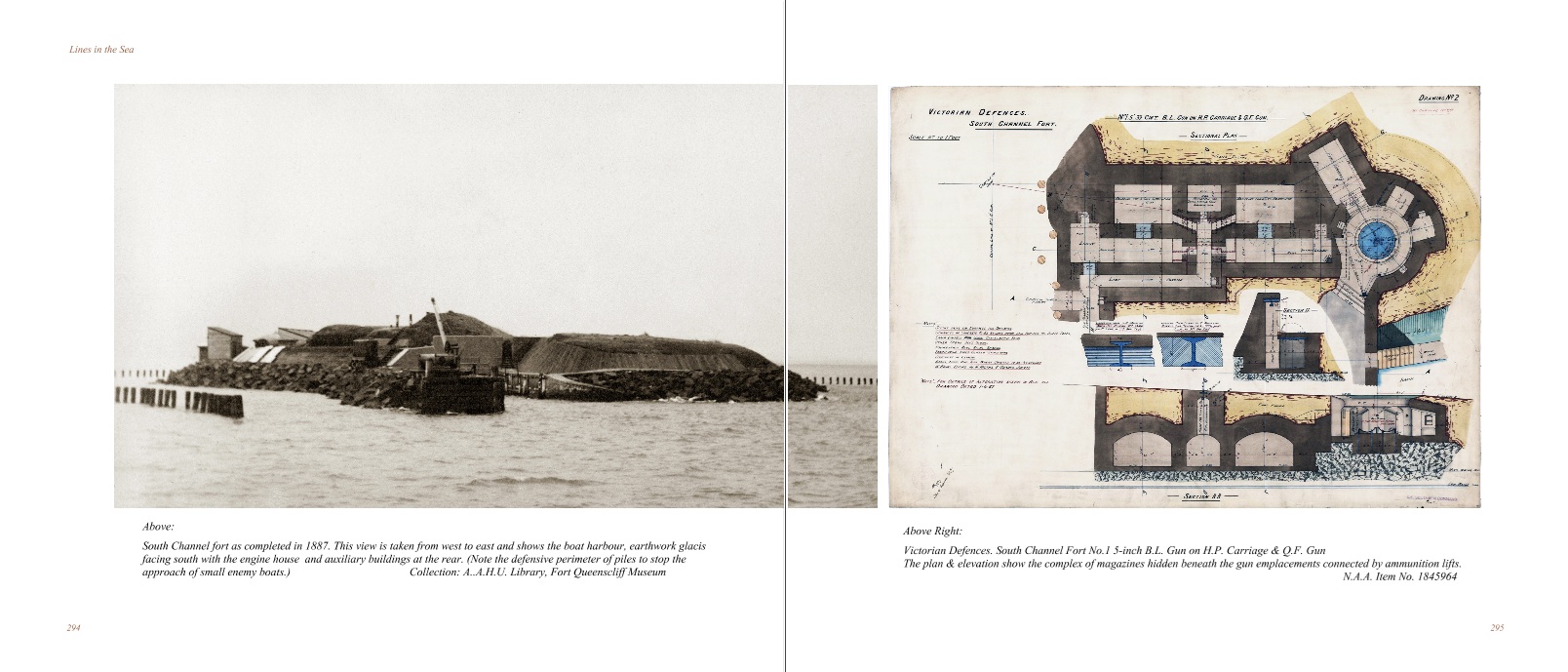
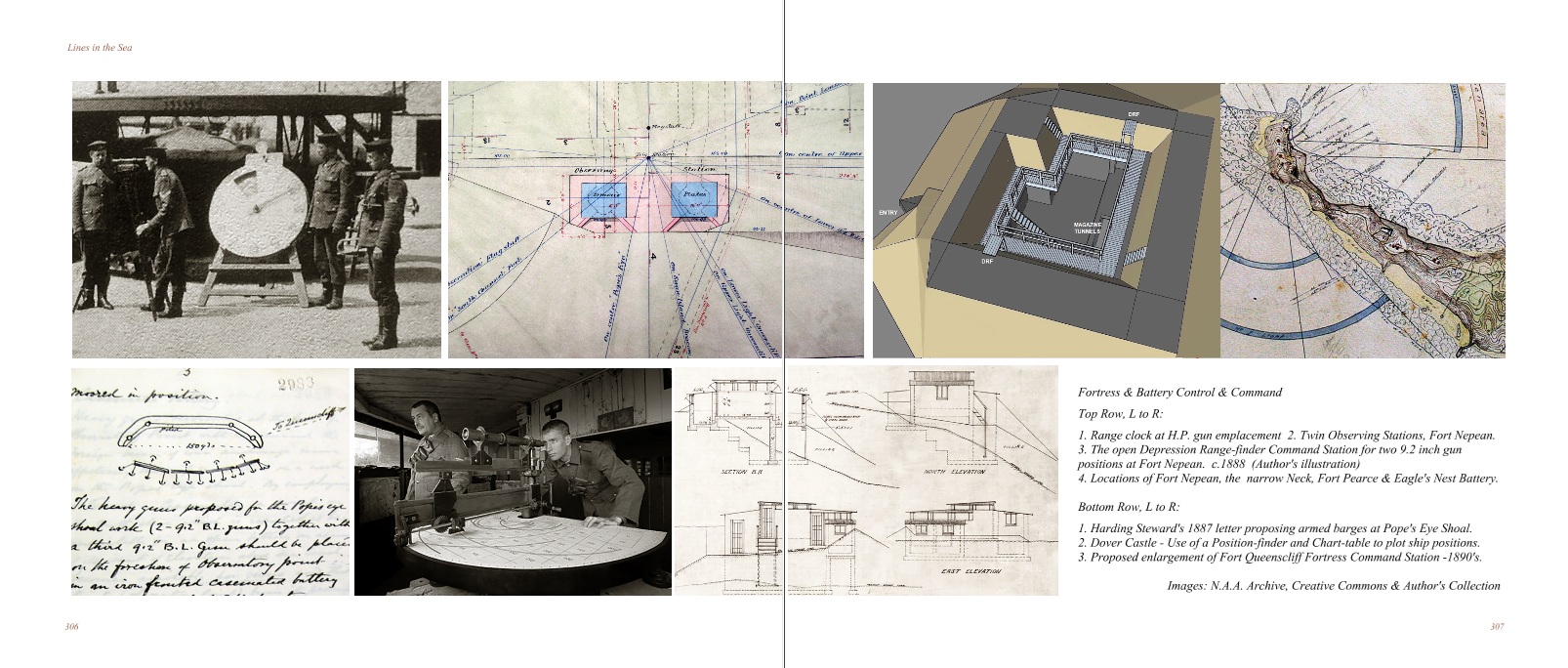
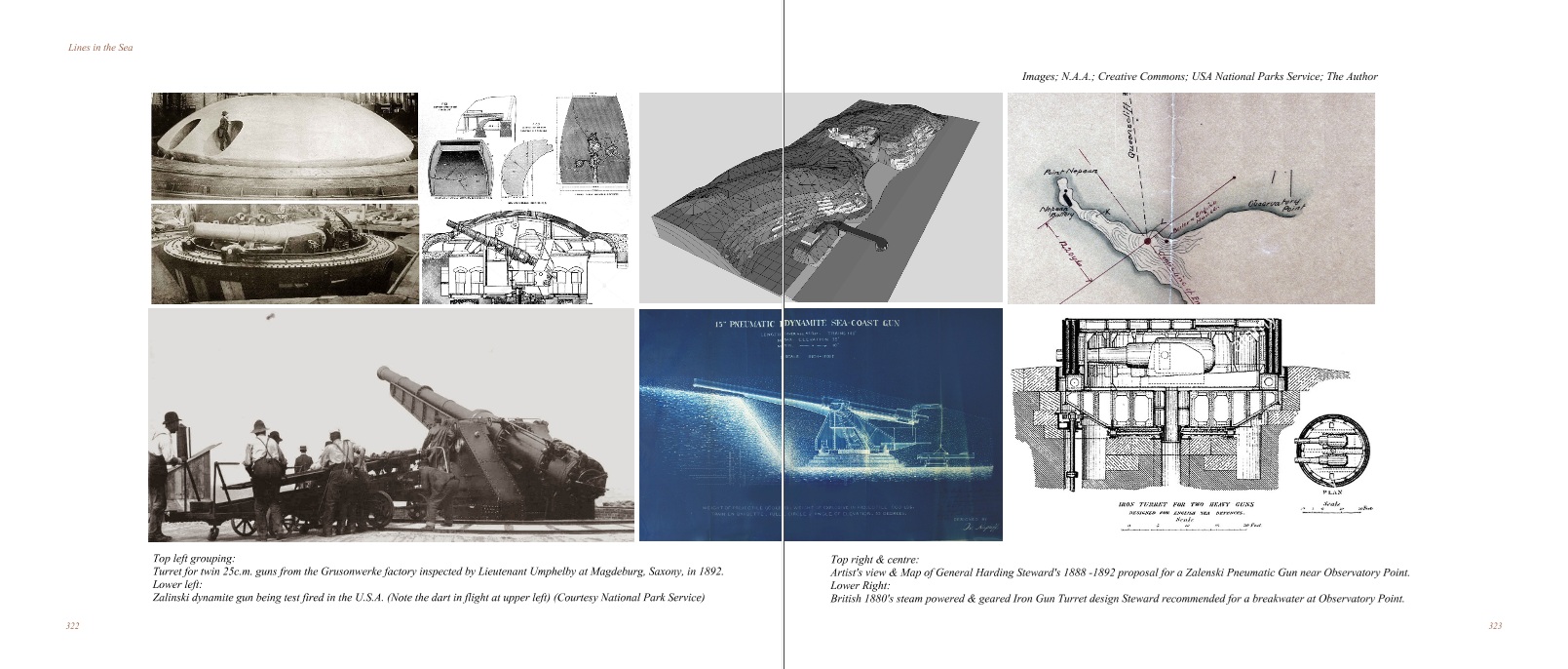
I am amazed at the detail and quality of the photos, charts and line drawings in this chapter. The 6 inch H.P. drawings are out of this world and having seen an original gun mounted at Lyttleton in New Zealand fitted nicely into place. The dual proof trials of the gun and mounting at Shoeburyness is most unusual as the golden rule has been “No proof without items already proven!!!! The armament at South Channel Fort is varied but each type has been given distinct functions and type of target along with mine fields and search lights. Lt. Harding must have been a very competent and experienced tradesman to have carried out repairs and design changes to the guns. With regard to your own photo on page 308, are there many relics like the base mounting of an H.P. gun at Nepean? The detail of the proposals for the armament at Pope’s Eye is very interesting what with a Brennan Torpedo and a Zalinski Gun. A Gruson Turret for the 9.2 inch guns is a strange item to have in the defences of Port Phillip Bay.
Conclusion
This book is a most interesting read and I have enjoyed your research and writing immensely. The quality of the printing, binding, choice of paper and the dust jacket is first class. Your book has provided me with a large number of items that I was not aware of and as a result I will be going back to it regularly.
Review by Lt. Colonel David Brook R.A.A. (Ret.)
As part of his long service as an R.A.A. Officer David Brook was attached to the U.K. Ministry of Defence Proof and Experimental Establishment, Shoeburyness, for proof training in 1973. He commanded the R.A.A. Proof and Experimental Establishment, Port Wakefield, S.A. in 1974-1977. This was followed by a posting to Headquarters Logistic Command, Melbourne, as a Proof & Experimental Staff Officer. Following his military retirement David became Editor of ‘Roundshot to Rapier, a history of Artillery in South Australia from 1840 to 1984’. Since then, he has researched and published upon a wide range of historical defence topics.
As a dedicated yachtsman, David sailed the Solent, the Thames River estuary and, the English Channel while in the U.K.. When stationed in Melbourne he frequently sailed Southern Port Phillip as a member of the Blairgowrie Yacht Squadron.
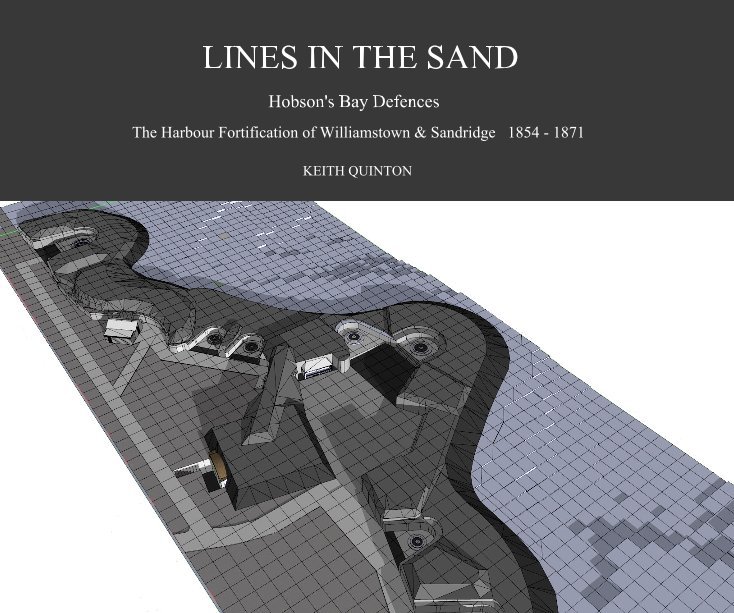
Order a copy of the book at Blurb
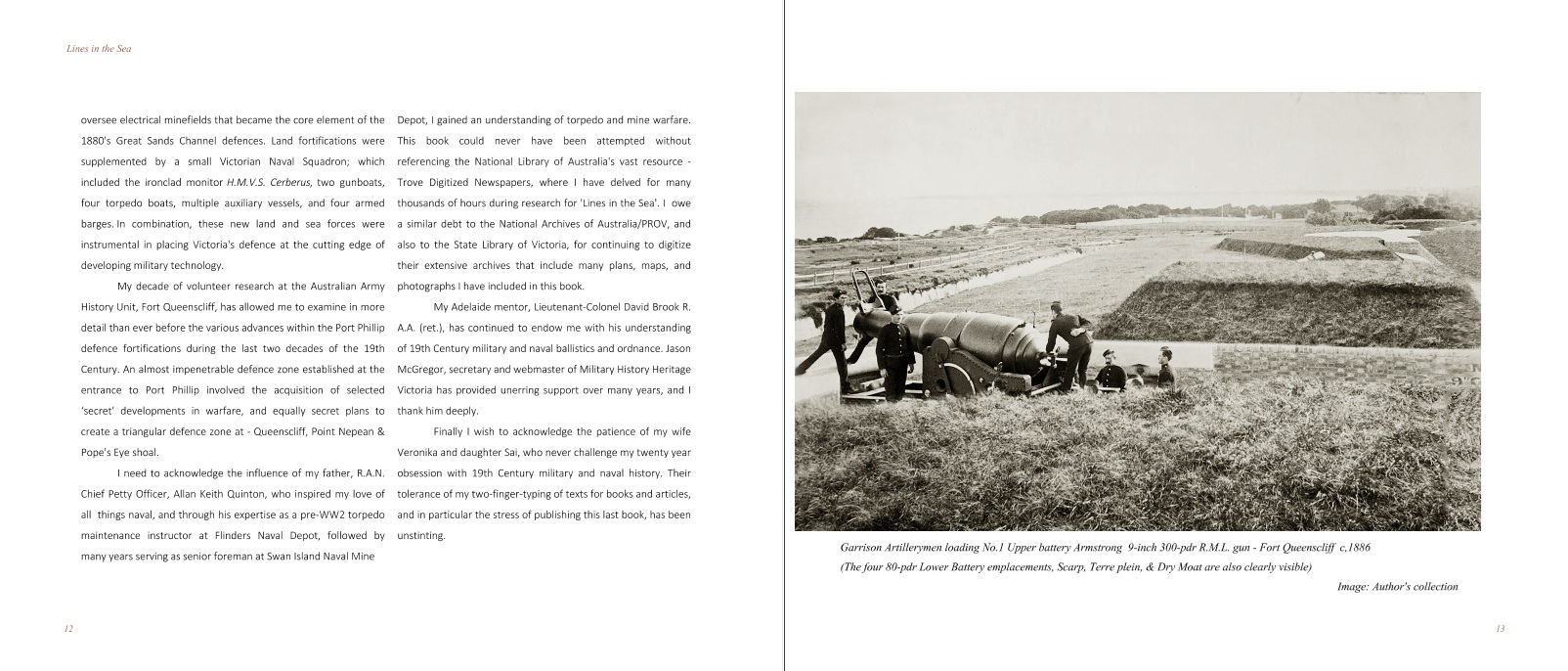
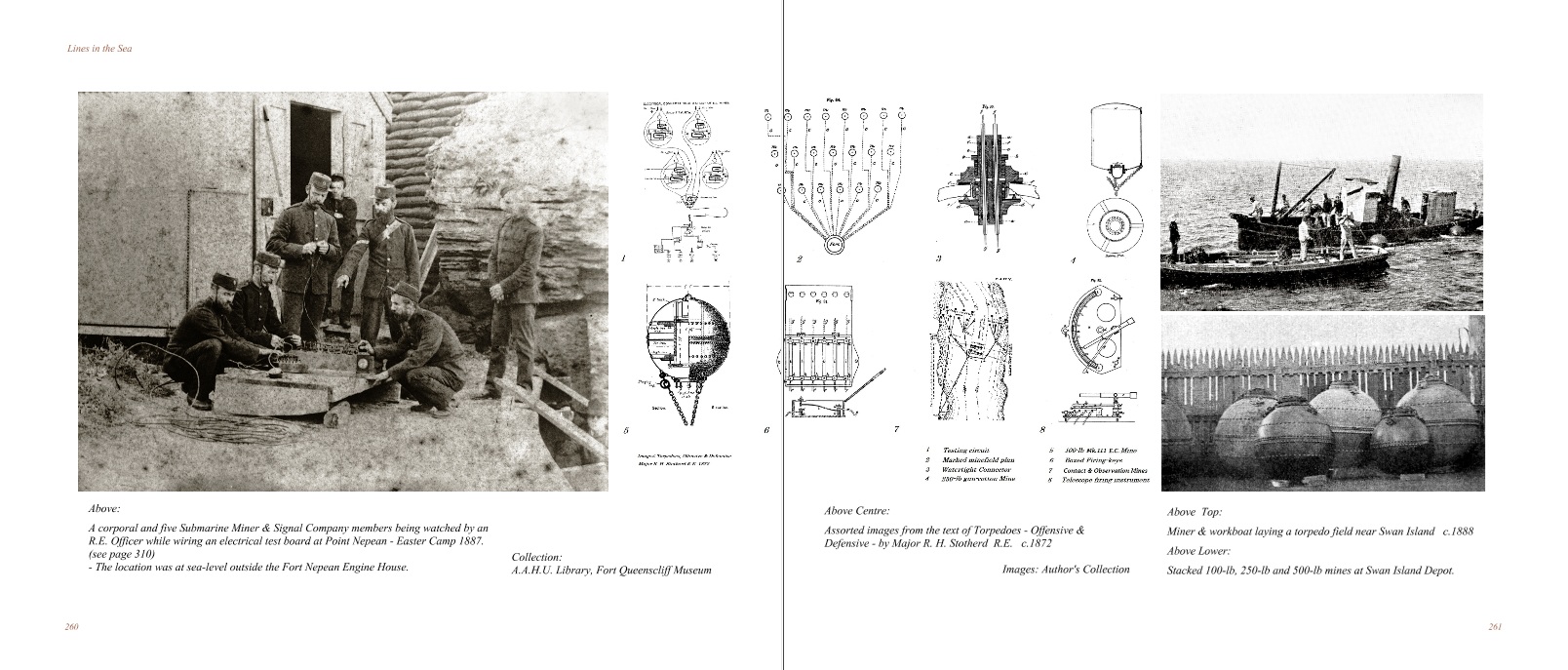
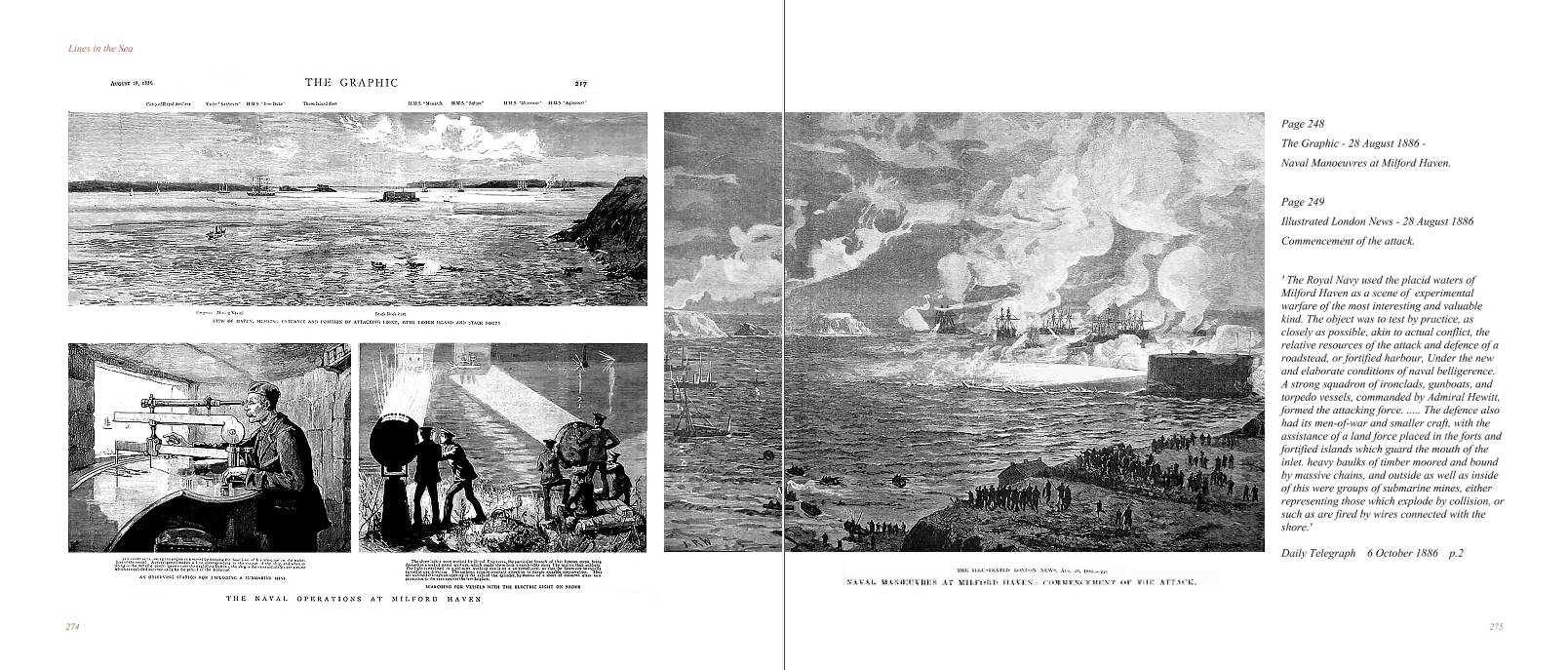
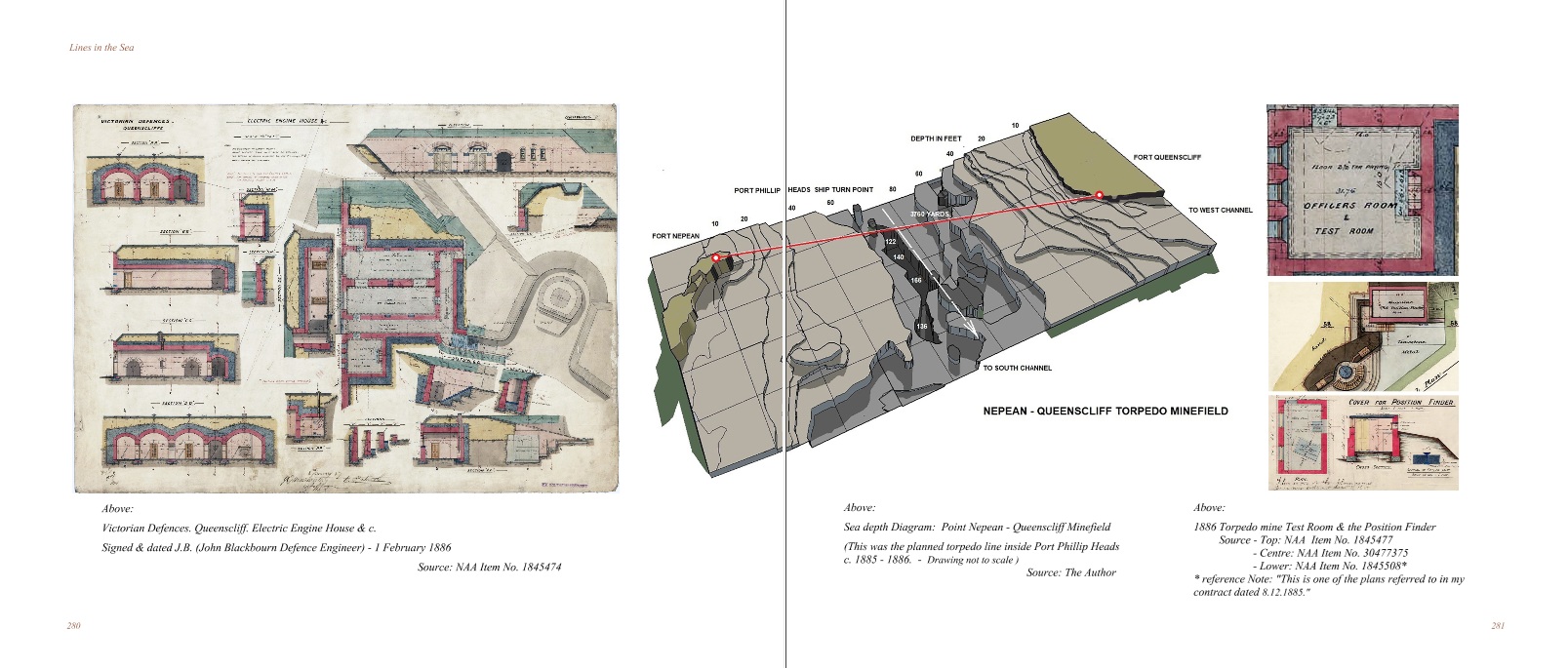
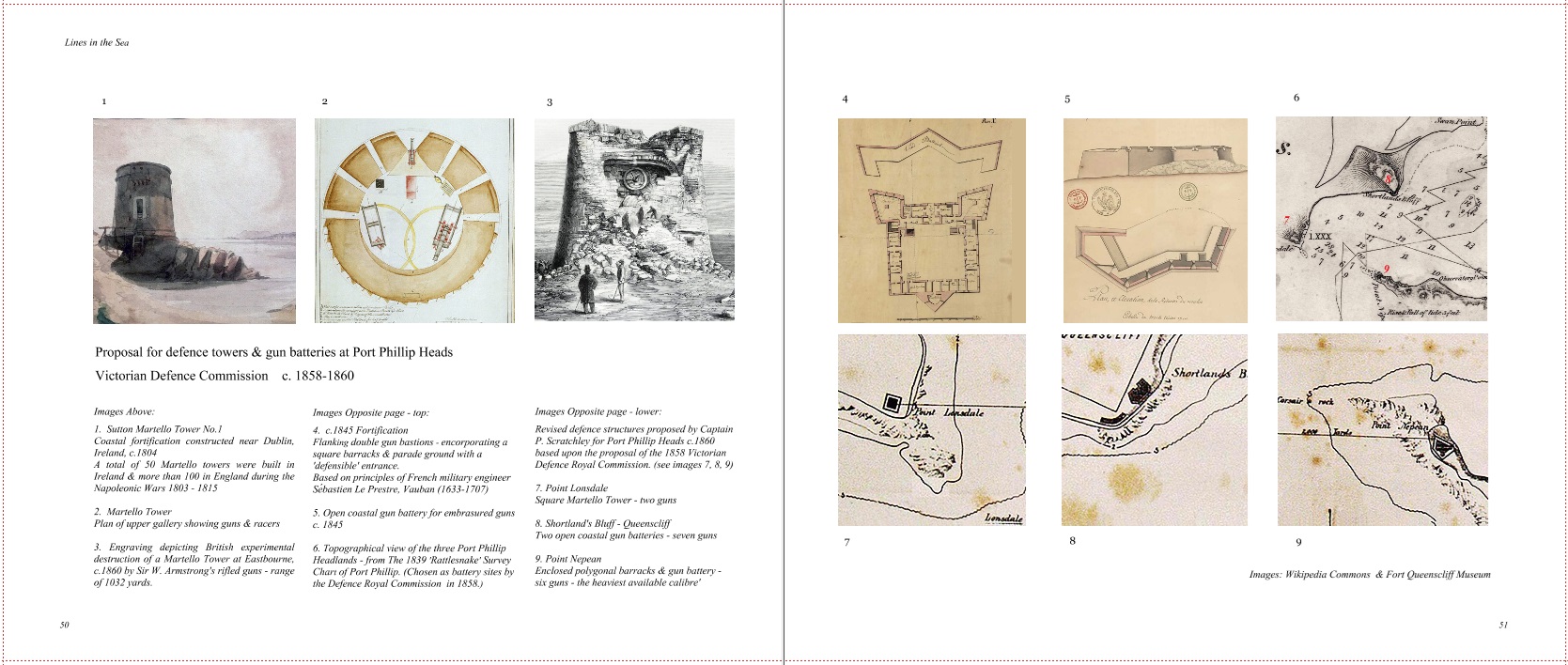
Click on the images below to see the full page spread from “Lines in the Sea”
Contact Keith Quinton about this article.