It is asserted by many that there was a second warning given to Darwin of the incoming air raid of 19th February 1942. The story says that as 188 aircraft approached the town, having launched from four aircraft carriers, two radioed warning were given from the Tiwi Islands to the north. Both – one from a missionary and one by a naval officer – were ignored. The first, Father John McGrath, is by now a well-placed figure in the story; while the second, John Gribble, is an obscure figure who nevertheless gave good service – after a distinctly rocky start in the previous Great War. [1]
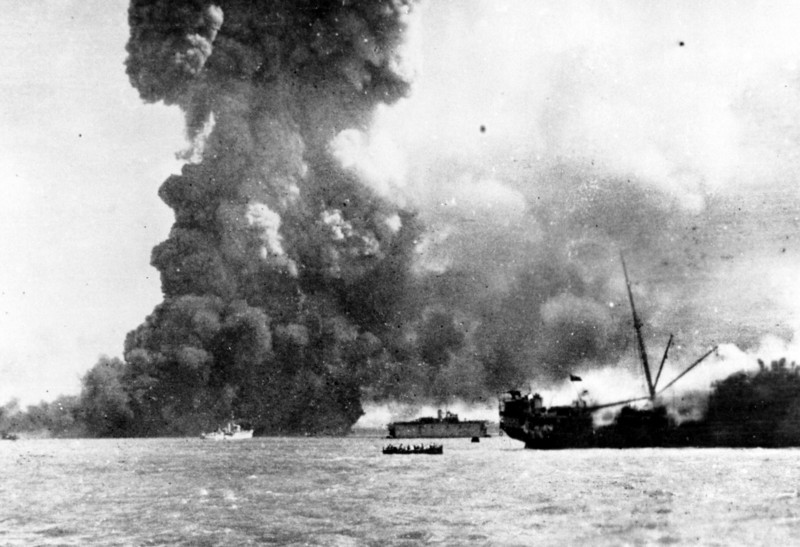
Before we turn to the curious career of the Navy officer, it is worthwhile also dispelling the myths around the warning sent by McGrath. Firstly though, a quick summary of the attack. Following an unsuccessful assault by four submarines in January 1942, the Imperial Japanese Navy still had the need to secure their right flank as the campaign to take New Guinea was to start. Four of the Pearl Harbor aircraft carriers were available, and in a 17-ship flotilla, they were brought south. They launched their aircraft for a circular course to cross the Australian coast from the east and attack Darwin from the south. The Kate vertical bombers would drop their weapons and then the Val divebombers would set about the harbour’s shipping. The Zero fighters would protect them all. And so it was done. The raid killed 236 people, sank 11 ships, and destroyed 30 aircraft for a loss of four Japanese machines. But let us turn back to the time the raid was approaching.

As the main force was crossing over Bathurst and Melville Islands, using Apsely Strait down their dividing channel as a navigation marker, they were seen by the inhabitants far below. Owen Griffiths, a local naval officer, later related that their engines were heard by aborigines at the Bathurst Island Mission Station. This station, operated by the missionaries of the Sacred Heart, was operated for the benefit of “full blood” aborigines. The missionaries themselves were a tough and self-reliant lot, endeavoring to establish outposts of European-type civilisation in such isolated locations. No different was the missionary in charge of Bathurst Island, Father McGrath, who had been there for 15 years. He was “well liked and respected by all who came in contact with him.”[2]
The single-engined aircraft passing overhead were tremendous in number. Squadron after squadron droned past. Quickly grasping the importance of getting a warning to Darwin, Father McGrath radioed a voice message to the Darwin civil radio station – call sign[3] V.I.D. – that a large number of aircraft were overhead. The time was 0935. This message was passed to the RAAF and should have given those at Darwin perhaps 10 to 20 minutes warning of the raid.

Frederick Scherger (later Air Chief Marshal Sir Frederick Rudolph William Scherger KBE, CB, DSO, AFC) was the Acting Air Officer Commanding when the first raid commenced. He recalled: I hadn’t received any verbal warning, this famous message that was supposed to come in, I hadn’t heard of it, hadn’t seen it, and it had apparently come into the operations room and they were checking it. But the timing of all this is something that I never did get very definitively. I believe that the raid and the message arrived at about the same time.”[4]
The “message” would become the subject of much analysis. It has been surmised by some historians that McGrath’s message transmission resulted in the Japanese attacking him within seconds of his message to “silence him.”[5] This is impossible: the Japanese carriers and their aircraft were observing radio silence; and if the ships heard the transmissions they therefore would not send a message to the strike force to attack. No record of any such transmission has been found. Furthermore, analysis of the aircraft shows that they did not carry suitable radio transmission detection equipment, nor indeed weighty radios. Their aircraft to aircraft communication was by hand signal and flashing light.
But it does seem McGrath had just completed the message when he was forced to dive for cover amidst the roar of aircraft engines and machinegun fire. Nine Zeroes, from the Hiryu, were attacking what was nominally a RAAF “Advanced Operational Base”, but there was little there aside from a fuel dump and some pre-positioned bombs. [6] This target would probably have been ignored if it wasn’t for the presence of a United States Army Air Forces C-53 transport (a military version of the Douglas DC-3). The C-53 had been flying back to Darwin on 4th February, when the weather became bad and an emergency landing was made on the tiny strip, which had otherwise only been used by light civil aircraft or RAAF Wirraways. The big transport had clipped its left wing, damaging the wing tip and aileron. It was waiting for new parts to arrive, and was still present two weeks later on 19 February. Otherwise the only other military presence were three of the American C-53 crewmen and two RAAF guards.[7]
The airfield in those days ended near the church, which still stands. The air group commander having sighted this target, six Zeroes were detached and swooped down while three stayed on top cover. The transport being targeted was nearby. The overspray of fire from the Zeroes tore into the bushes and trees near McGrath’s small hut. It was this which later gave rise to the story he had been targeted. But McGrath was not silenced in any case, as he was able to broadcast later that day. According to historian Robert Rayner, it took: …some time to re-erect his antenna and establish contact after having been shot up that morning. Contrary to the story that his transmissions had been jammed he had, in fact, simply required the time to move further into the bush with his equipment and set up again.[8]
Ironically, McGrath later confirmed he had only specified a “large number” of aircraft were Darwin-bound. This therefore confused them with ten USAAF P-40 Kittyhawk fighters over Darwin having returned from an aborted mission to Java. Nine would be shot down, with four pilots dying in the ensuing fighting.
The second warning
Writing in 1966, local journalist Douglas Lockwood asserted in his book Australia’s Pearl Harbour that a second warning message was transmitted by a naval coastwatcher, John Gribble, to the naval communications facility at Wireless Telegraphy station Coonawarra, just outside Darwin, at 0915.[9] Coastwatchers were observers, brought into the Navy, stationed in the islands and coastlines of Australia’s north and beyond. They gave immensely valuable service in the war, transmitting observations to pre-set headquarters and command positions. The work was dangerous, because although the coastwatchers were ostensibly military, hurriedly given naval ranks and uniforms as the war widened, they were very obviously civilians who were spying in conquered territory, and were dealt with – fatally – as such if caught by the enemy.[10]
Coastwatcher John Gribble, said Lockwood in his book, was based at a Melville Island mission station, some 25 miles north and east of the Bathurst Island site where McGrath was based. The second lengthy work studying the first raids, Timothy Hall’s Darwin 1942, repeats the assertion, stating that Gribble was a coastwatcher equipped with a radio and code, and had sent a message to the Coonawarra WT station.[11] This story has made its way into books;[12] into curriculum studies[13] in Australian schools, and onto government[14] [15] websites – unfortunately, for it is a myth.
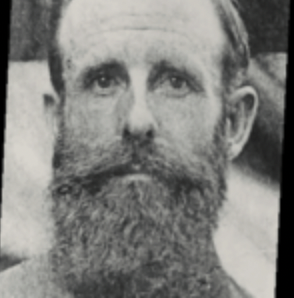
Who was Gribble? He was a man with a chequered past. John Wriede Bulmer Gribble was born in Cairns, Queensland, on 15 Jan 1896. He served in World War I at Gallipoli in the Australian Army’s 1st Infantry Battalion[16], and was wounded, commissioned as an officer, and again wounded in action, in 1917. However here what was a sterling military career struck a major rock. He was court-martialed for offences involving being absent without leave, and “scandalous conduct…unbecoming an officer and a gentleman”, namely passing cheques without sufficient funds to back them. Gribble was eventually “cashiered from the AIF” on 25 January 1919; that is, he was expelled from the forces. The armed forces then, and now, take an extremely dim view of someone who they have appointed to be a leader of men being found guilty of offences involving trust.
Gribble also suffered various other punishments, including the loss of 91 days pay, and forfeiture of his medals.[17] There is a plaintive request in his documents, made years later, for his medals to be allowed once more – it was refused.
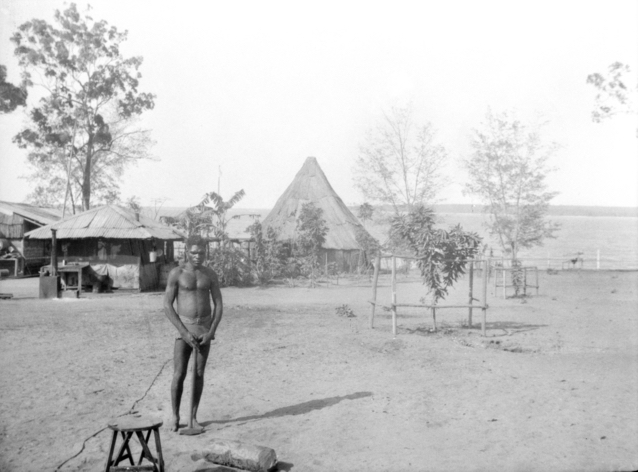
Dr John Morris, writing his PhD thesis, sheds further light. Twenty-three years later, Gribble was working on Melville Island, an energetic administrator of government estates. John – usually called Jack – Gribble was the founder of an aboriginal settlement of Milikapiti.[18] He was appointed to the Island post on 1 May 1941.[19] He was an “Inspector rather than a Patrol Officer in the Native Affairs Branch.”[20] Under Gribble, some of the Tiwi people, the natives of the islands, built a settlement of “round houses of mud walls with inverted conical bark roofs, similar to those used at the Garden Point control base, and described variously as being “Zulu”, “New Guinea” or “Fijian” in style.”[21] He was also busy preparing the island for roadways, and organizing patrols against Japanese landings.
On the day of the raids, Gribble, said Lockwood, made a very basic transmission to Darwin: “Area Combined Headquarters had received the Navy report from John Gribble,” simply saying that he was sighting “a large number of aircraft. There were no other details, either of identification or direction of flight…”[22] Tim Hall, writing in Darwin 1942 years later, also reports that Gribble transmitted his advice to “the Coonawarra signaling station outside Darwin, which was a naval establishment.”[23]
Lockwood then says that Lieutenant Commander JCB McManus, a “senior intelligence office at Navy Headquarters” was telephoned the warning by Coonawarra, but who after discussing it with a RAAF Intelligence Officer (unnamed) was “overruled” and nothing was done. McManus, continues Lockwood, when he saw the enemy planes at 0958, went personally into the office of the Naval Officer in Charge, Captain E Penry Thomas RN, who “sounded the sirens”,[24] although the Chief Surveyor of the NT later attested it was McManus who rang the sirens.[25]
There are three contradictions to Lockwood’s account. The warning is debunked as impossible for technical reasons in Robert Rayner’s The Army and the Defence of Darwin Fortress. Rayner says Gribble “ordinarily communicated on a daily schedule” but could “transmit only on frequency 6840 to V.I.D. Darwin” not to Coonawarra.[26] This would mean that the military apparatus would not have received the warning, even if Gribble had actually transmitted it – which our further two contradictions assert was not so. In summary, Gribble had a “frequency locked” radio, and could not have talked to the naval station. Indeed, in the Lowe report RAAF Group Captain Scherger, talking about the earnings, confirmed that the use of “X locked radios” was the norm.[27]
Secondly, Dr Morris found a contradiction of Lockwood’s statements: “Some publications state that Gribble radioed a warning to Darwin from Garden Point, but Bennett denies this. NTAS, Series TRS 226, Box 52, Transcript of interview with Brother Ed. Bennett, 23/4/1993, p. 5, states that although Father Connors urged him to send the message, Gribble stated that it could only be sent in code and by the time it was decoded the Japanese planes would be over Darwin.”[28]
The reference to “code” is odd – perhaps it means Morse code, which indeed would have had to be translated by the receiving station, although that was often routine for those days, although voice communication was also in use.[29]
Lockwood acknowledges that the message was not mentioned in the Lowe Commission inquiry into the raids but he nevertheless persisted with it. To further the fiction, he somehow doubled the distance between the mission stations to 50 miles. In reality any message from Gribble would not be sent 20 minutes earlier than McGrath’s message, as Lockwood says, but more like five minutes later, as the locations were only about 25 miles apart, and given the flying speed of the formation, this was when the aircraft would have been seen. McGrath was on the western island – Bathurst – and Gribble was on the right-hand or eastern island – Melville. Given the Japanese formation was coming in from the north-west, McGrath would have seen them first.
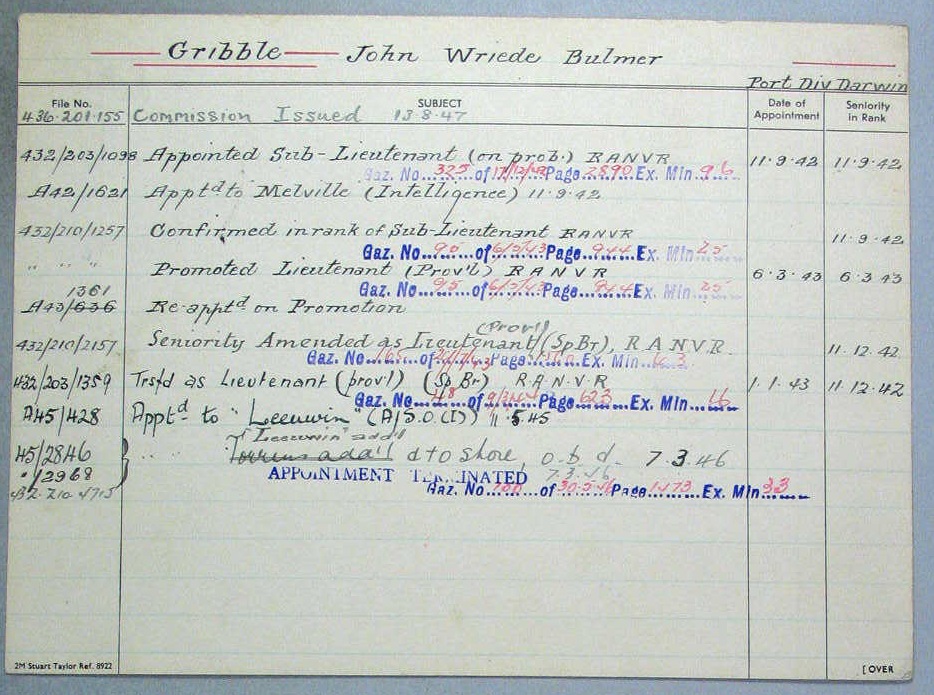
Gribble was not however in the Navy at the time of the raid. Further analysis and government records shows that he indeed received a commission in the Navy as a Reserve officer, but not until well after the first raid. [30] His Service Record[31] advises that he was appointed as a probationary sub-lieutenant on 11 March 1942, three weeks after the first attack. His record is stamped “Coastwatcher” with no further details. He did sea service in Kuru, Terka, and Southern Cross, all small ships based in Darwin.
Third and last of the inconsistencies is that Coastwatcher founder Feldt’s history of the organisation, which was extensively researched and ran to 424 pages, significantly has no mention of Gribble. If a Coastwatcher had made such a warning, even to see it ignored, we can be assured that Feldt would have written about it – especially as its researching would have been comparatively easy compared to the feats performed by the Coastwatchers in far-flung islands of the Pacific. And Feldt would have cited any Gribble warning as an example of how successful his Coastwatchers were, even with any warning being ignored.
Despite such inconsistencies, the story that a Coastwatcher warned of the raid, and that he was a naval officer, has been spread widely enough to have become part of the overall story of the Darwin raids. All three assertions: that Gribble was a naval officer; that he was a Coastwatcher, and that he sent a warning, are false. However he was later both a naval officer and a coastwatcher.
Sub-Lieutenant John Gribble served on through the war as a Coastwatcher in the Intelligence section of the Navy, with promotion to Lieutenant – the Army equivalent of Captain – on 1 Jan 1943. His appointment was terminated post-war as was normal, on 7 March 1946, and he eventually died in 1965. If he never could wear his World War I medals, it is to be hoped he wore his World War II issue with pride.
-o-o-O-o-o-
Dr Tom Lewis OAM is a military historian, and a public speaker. He is a retired naval officer and the author of 23 books. Some of his works concerning the Australian northern air war are Bombers North, Carrier Attack, Eagles over Darwin, and The Empire Strikes South. The Sinking of HMAS Sydney – “How sailors lived, fought and died in Australia’s greatest naval disaster” was released by Big Sky Publishing in 2023. His latest works are The Secret Submarine, the story of the I-178 sunk off Sydney in 1943 by two RAAF bombers, and Cyclone Warriors, the armed forces in Cyclone Tracy.
[1] A note on sources. Some of this material was published in the same author’s book (with Peter Ingman) Carrier Attack (Avonmore, 2013). A full list of all sources can be found in that work.
[2] Griffiths, Owen. Darwin Drama. Sydney: Bloxham & Chambers, 1947. (pp.36-37)
[3] ‘VID’ was the call sign for the AWA Coastal Radio Station located in Darwin’s botanic gardens, now off Gardens Road on the Gardens Golf Course. See also pages 15 and 31 of Alford, Bob. Darwin’s Air War. Northern Territory: AHSNT, 2011.
[4] Northern Territory Archives Service. Dunne, Richard – NTRS 226. Typed transcripts of oral history interviews with “TS” prefix. TS 378. (p. 20)
[5] Rayner, Robert. The Army and the Defence of Darwin Fortress, NSW: Rudder Press, 1995. (p.190) See also Hall’s Darwin 1942: “The jamming, almost certainly carried out by one of the aircraft carriers, was a normal tactical manoeuvre by the Japanese.” (p. 22)
[6] Shores et al; p.179; mentions Hiryu’s aircraft attacked an airfield referred to as “Cape Gunpeal”, destroying a large transport aircraft there. Alford, p.31 confirms these were Hiryu aircraft.
[7] NAA File: 816, 37/301/293, Reference Copy of AWM Confidential No.137. “Findings and Further and Final Report – Commission of Inquiry on the Air-Raid on Darwin 19th Feb. 1942.” Mr. Justice Lowe, 1942. Item i/d 12082127. (This is the official transcript of the Lowe Commission, and runs to 929 pages.) p.863; evidence given by Bathurst Island Missionary John McCarthy.
[8] Rayner, Robert. The Army and the Defence of Darwin Fortress, NSW: Rudder Press, 1995. (p. 229)
[9] Lockwood, Douglas. Australia’s Pearl Harbour. Melbourne: Cassell, 1966. (p.24)
[10] Feldt, Eric. The Coast Watchers. Melbourne: Oxford University Press, 1946. Feldt, who was the major founder of the organization, published this book post-war and it has been reprinted in several editions.
[11] Hall. (pp. 60-61) Another history is Patrick Lindsay’s The Coast Watchers: The Men Behind Enemy Lines Who Saved the Pacific. NSW: Ebury Australia, 2011.
[12] For example, King, Jonathan. Great Battles in Australian History. Australia: Allen & Unwin, 2012. (p. 268)
[13] See for example SKWirk.com.au: http://www.skwirk.com.au/p-c_s-14_u-91_t-200_c-668/the-bombing-of-darwin/nsw/the-bombing-of-darwin/australia-and-world-war-ii/the-australian-home-front “At 9.15 am, a coastwatcher named John Gribble, stationed at Melville Island, radioed a warning to Naval Signals at Darwin. He described a large group of aircraft flying past. Naval Signals ignored the warning.” The site also says: “The port was crammed with 45 naval vessels lined neatly in a row”. However, the ships – actually 56 – were not lined up; nor was Darwin harbour, which is three times the size of Sydney Harbour, “crammed”.
Further: “The residents of Darwin seemed unaware of the attack. No alarm was raised during the 30-minute raid” and “This second attack did more damage to the city of Darwin itself.” The residents were certainly aware, as Lockwood – who was there – illustrates; and the second raid concentrated only on the airfields.
[14] “Forty-three minutes before the bombing, John Gribble, a coastwatcher on Melville Island, radioed the naval station that a large number of aircraft was flying toward Darwin.” Battle for Australia – the Bombing of Darwin. http://www.battleforaustralia.org.au/2901/Overview/Bombing_Darwin/ Accessed May 2012.
“Area Combined Headquarters at Darwin disregarded early warnings of the impending attack from a Catholic missionary on Bathurst Island and a naval coastwatcher on Melville Island.” Australia’s War 1939-1945. http://www.ww2australia.gov.au/underattack/airraid.html Accessed May 2012.
[15] The Battle of Australia 1942. “Forty-three minutes before the bombing, John Gribble, a coastwatcher on Melville Island, radioed the naval station that a large number of aircraft was flying toward Darwin.” http://anzacrememberance.aussieblogs.com.au/category/ww2/ Accessed May 2012.
[16] Australian War Memorial. First World War Embarkation Roll. http://www.awm.gov.au/research/people/nominal_rolls/first_world_war_embarkation/person.asp?p=159036 Accessed November 2012.
[17] National Archives of Australia. Service cards for Navy officers 1911–70 Series number: A6769 Gribble B2455. GRIBBLE John Wriede Bulmer: Service Number – Lieutenant 1491. Access status: Open Location: Canberra circa 1914 – circa1920, Item barcode: 4711423.
[18] Morris, John. Ph.D thesis. “Continuing “Assimilation”? A Shifting Identity For The Tiwi 1919 To The Present.” School of Behavioural and Social Sciences and Humanities, University of Ballarat, March, 2003. (p. 4)
“Milikapiti is the name of the community on Snake Bay, Melville Island. As a Native Affairs station and a government settlement it was, for many years, called Snake Bay, although Jack Gribble, its founder referred to it as Meal-e-gar-bid-dee, his rendition of Milikapiti. This is said to actually be the name of the spring which supplied water to Gribble’s post.”
“Pirlangimpi is the contemporary name for Garden Point community on Melville Island. The name Garden Point was given to the site by the British who set up the nearby Fort Dundas. It was used as the name of the Native Affairs control base and the mission station there. With the establishment of a Tiwi managed community at Garden Point, the name Pularumpi was adopted. Later this was changed to Pirlangimpi.”
[19] Morris. (p. 141)
[20] Morris. (p. 146) Footnote 39.
[21] Morris. (p. 143)
[22] Lockwood. (p. 24)
[23] Hall. (p. 60)
[24] Lockwood. (p. 25)
[25] Northern Territory Archives Service. Miller, Arthur – NTRS 226. Typed transcripts of oral history interviews with “TS” prefix. TS 703. (p. 14)
[26] Rayner. (p.190)
[27] Lowe Report, p. 214. “Darwin – is a receiver permanently on and tuned to this X frequency.” We suggest that in February 42 Gribble had a civilian radio. X frequency crystals were used in the Darwin area, probably because of the convenience of having the network “locked” on one frequency meant that Darwin could keep a listening watch on all posts at the same time. This idea was picked up by Coastwatcher organizer Eric Feldt and used in New Guinea and the Pacific.
There is only a brief note in Feldt’s book about Darwin but he mentions these radios were initially under RAAF control. This would make sense as the RAAF had the search capability along this coastline, and used some of the airstrips where the radios were located. Also the famous “Flying Doctor” aviation service, a civilian organization, was active and the radios probably served for this combination of purposes.
After the first civilian coastwatchers were captured in the New Guinea area the need to commission them as RANVR officers was realised. Gribble was commissioned in Sept 1942. By then he would have been given code books. Presumably there was no need to change the radios as the Darwin-area radios were already on X frequency.
Civil aviation historian Phil Vabre advises that AWA received a Commonwealth contract to operate some of the coastal radio locations for shipping traffic – hence maybe why Scherger calls them “naval”. (Vabre to the authors, emails of November 2012.)
[28] Morris. (p. 150) Footnote 62,
[29] In Lowe (p. 864) Dennis McCarthy, one of the missionaries at Bathurst Island, said they often reported unidentified aircraft. He also said it was a “spoken word message, a telephonic message” … it would seem sensible to send an urgent message in clear, and this indicates by voice.
[30] See the WWII Nominal Roll at http://www.ww2roll.gov.au. Also National Archives of Australia Series number: A6769. Gribble John Wriede Bulmer. Access status: Open Location: Canberra. 1911 – 1970. Item barcode: 5216408
[31] National Archives of Australia. Gribble JWB. Item ID: 5216408
Contact MHHV Friend about this article.