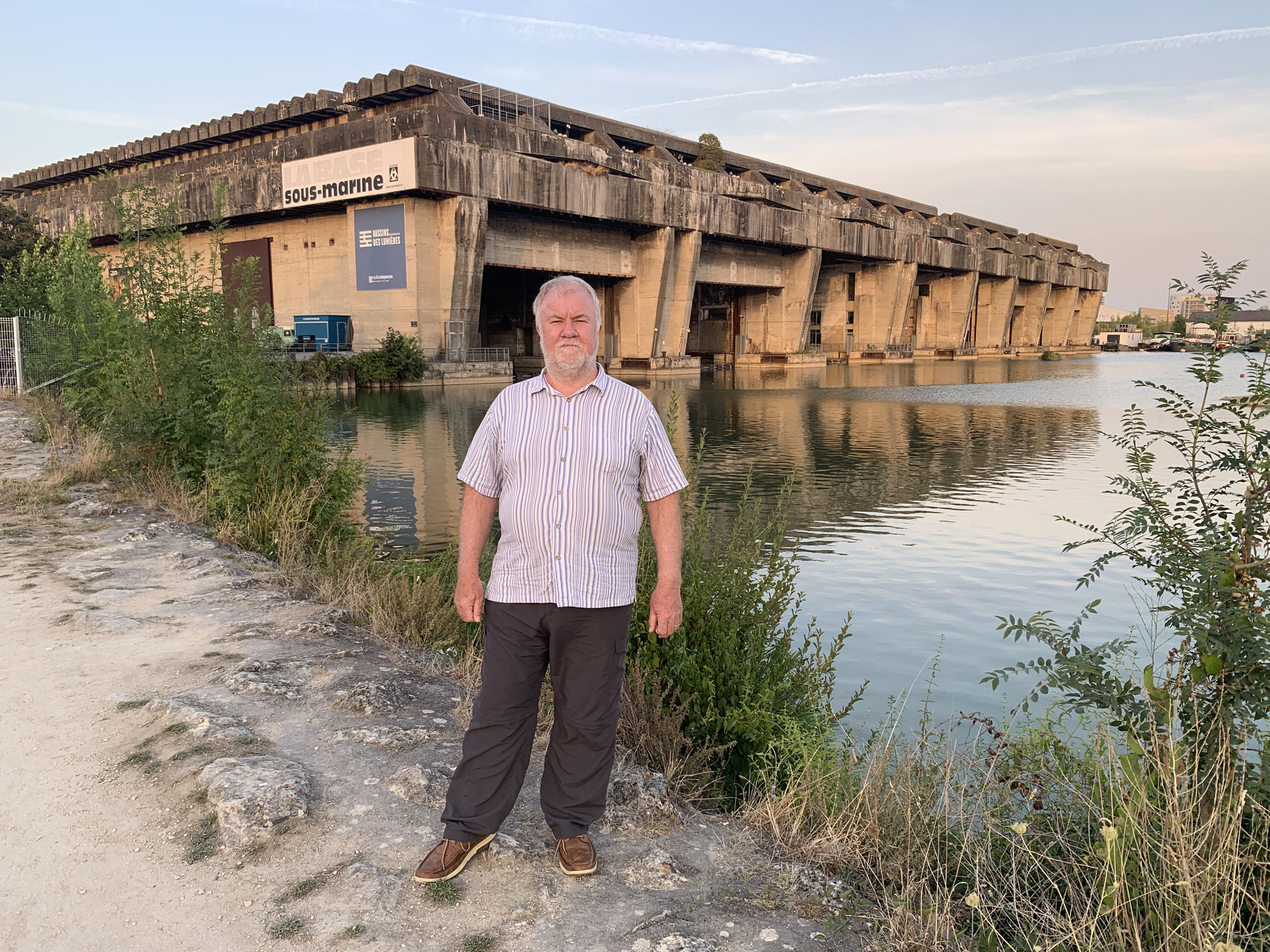
I was fortunate recently to be in Bordeaux, France, and to visit one of the few remaining WWII submarine pens in the world.
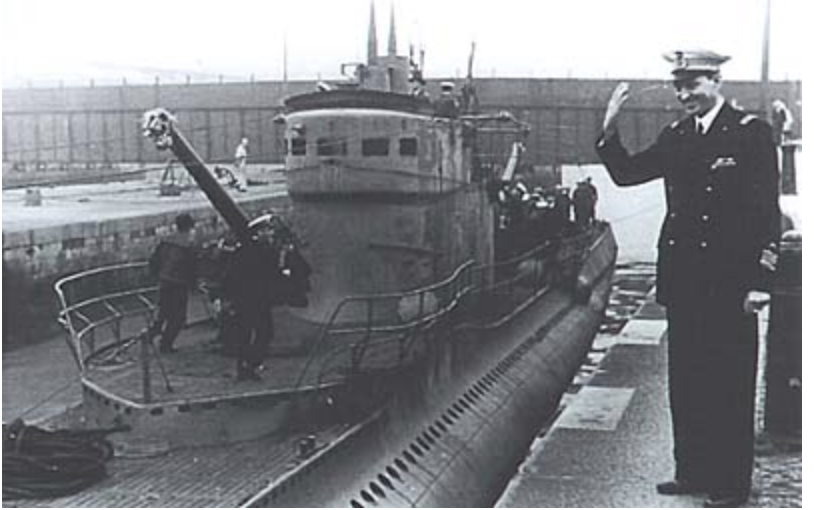
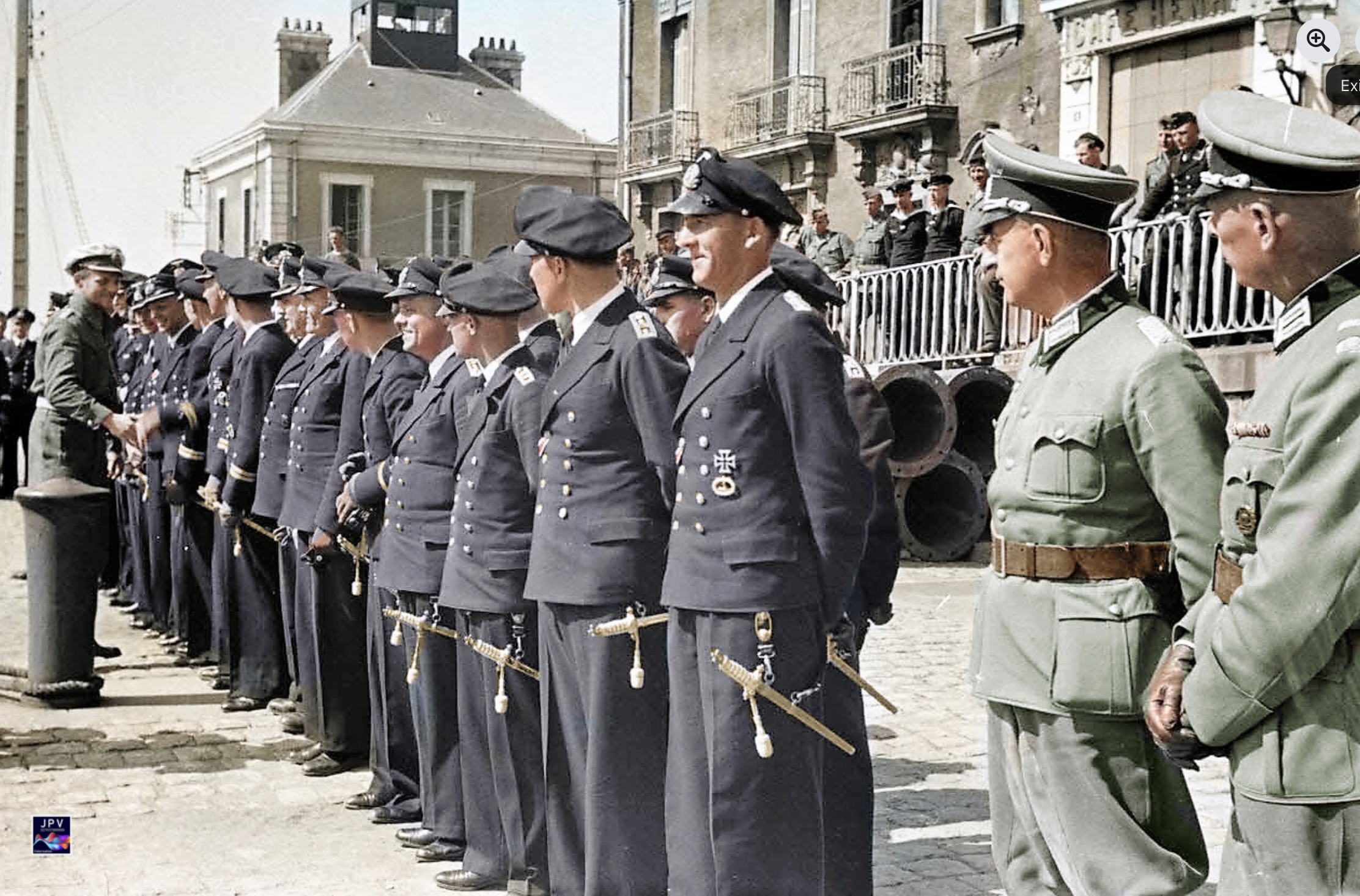
They were a particularly European phenomenon, created by Germany’s Kreigsmarine, to protect their U-boats. The Third Reich had the largest fleet submarine force to ever sail the seas with 1,162 vessels. (The Japanese had 128 fleet boats, but nearly 900 midget submarines.)
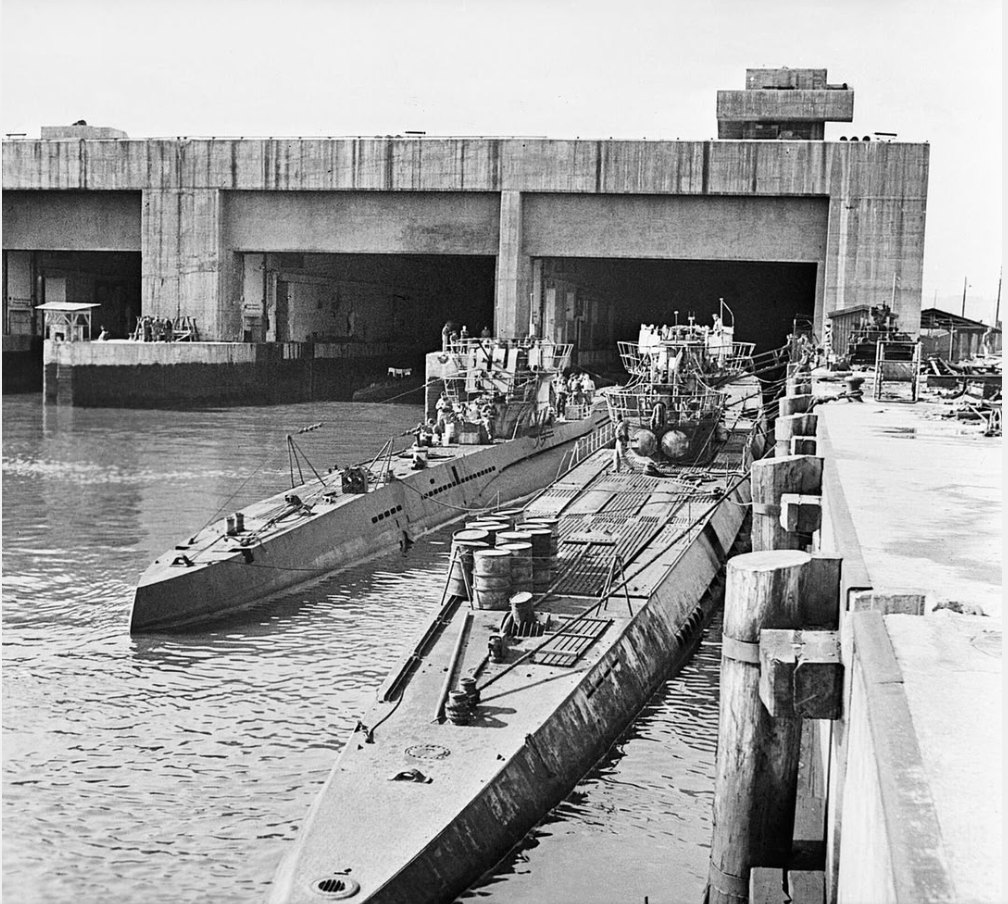
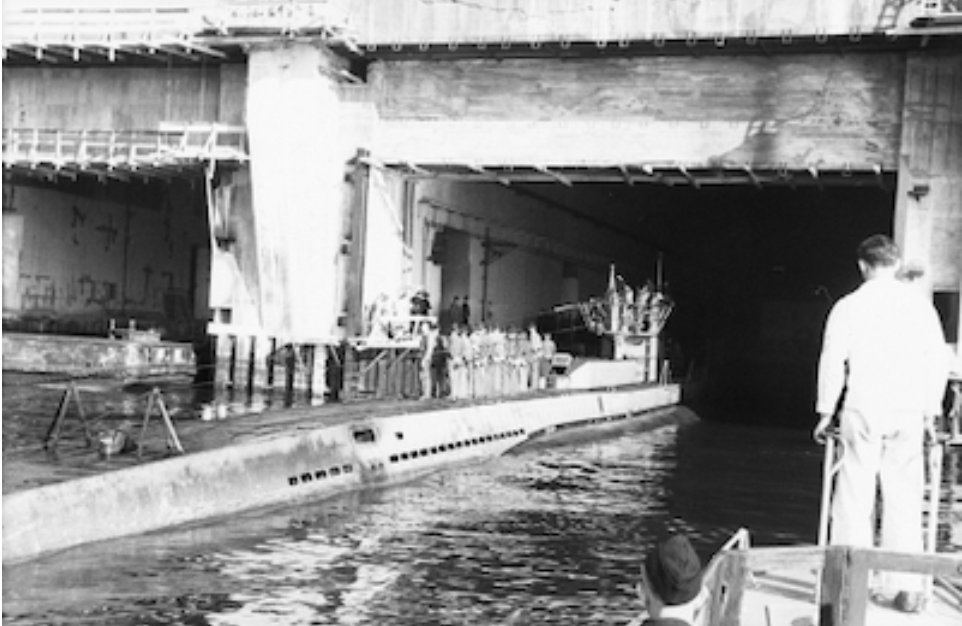
The necessity for the pens was to protect the submarines operating in the northern Atlantic and the Baltic from Allied air attacks. A conventional submarine base was vulnerable to bombs, rockets, and strafing, and so the idea of the pens was to basically build a roof over the base.
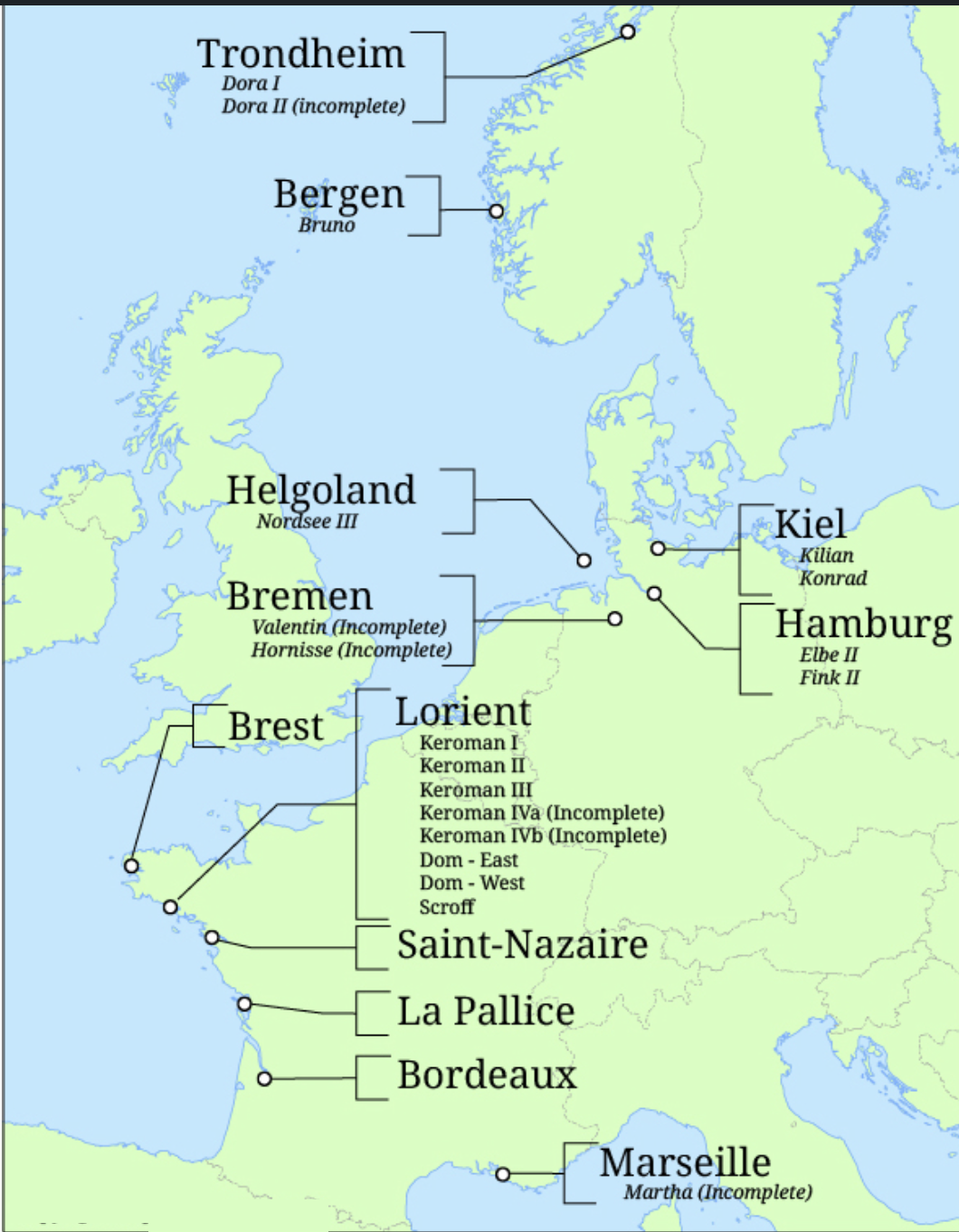
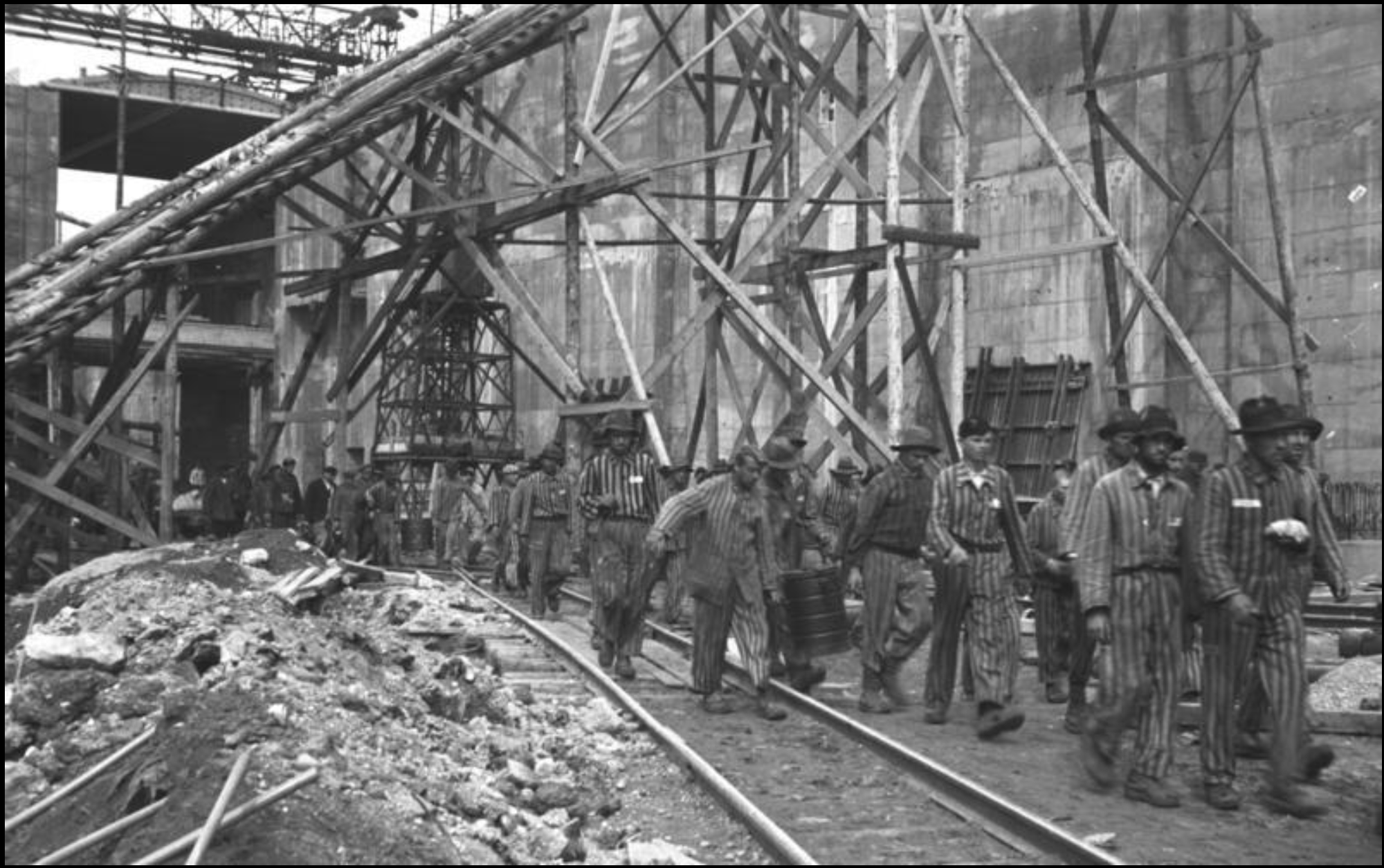
To do that needed a lot of concrete and a lot of labour. A lot! For example, the five bases in France used 4.4 million cubic metres of concrete. In Germany, the pen in Hamburg was constructed by 1,700 slave labourers over four years.
Bordeaux was initially home to some of the Italian submarine fleet. From September 1st 1940, the Bacalan harbour district in the northern part of Bordeaux was used to house the Italian 11th Gruppo di Sommergibili. Camouflage nets were installed along the piers and over the dry docks to hide the 32 submarines, which made several hundred patrols into the Atlantic and beyond. The base was occasionally attacked from the air with little initial effect.
The Germans meanwhile were also doing well in their own submarine operations. They were already building submarine pens, called U-Boot-Bunkers, to protect their force from Allied bombing. Pens were built in now-occupied France in Brest, Lorient, Saint-Nazaire and La Rochelle. In September 1941, construction of the 5th Atlantic Coast Submarine Bunker began in Bordeaux.
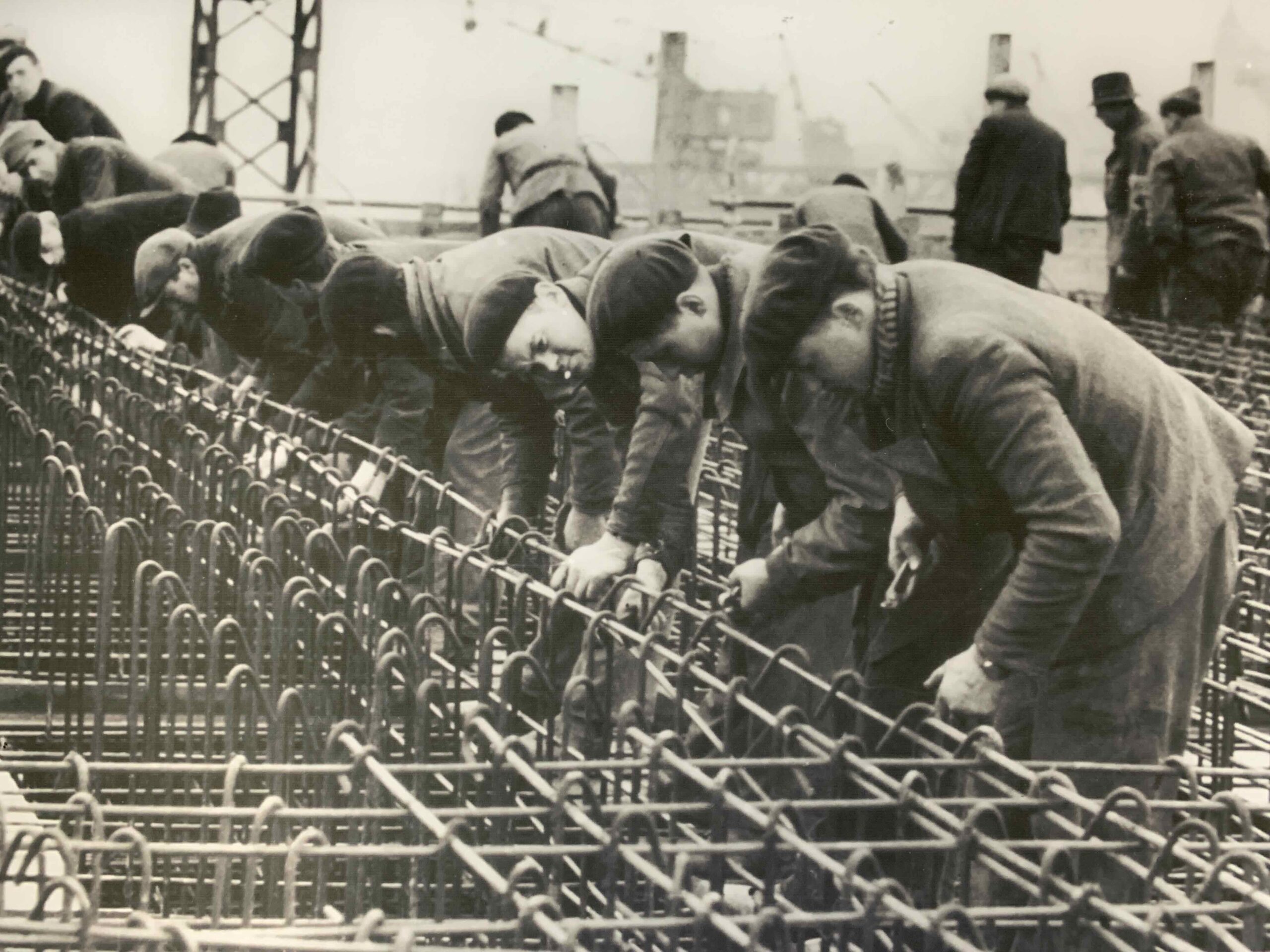
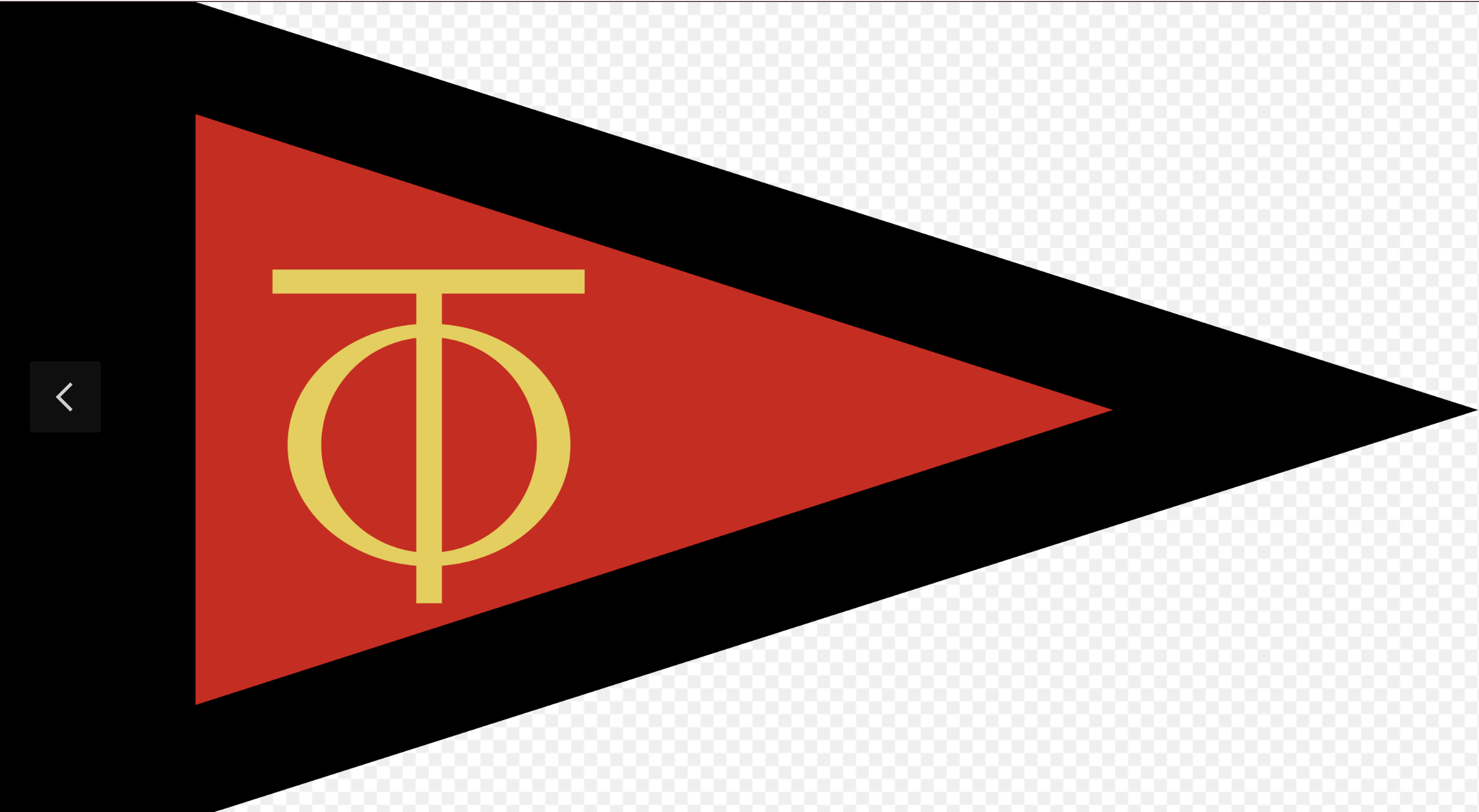
It took 19 months to pour the 600,000m of reinforced concrete required. The construction site, managed by Organisation Todt, needed a lot of manpower. 6,500 men toiled day and night to lay the foundations. More than a third of them were Spanish republican prisoners, working with French, Belgian, Italian, and Dutch workers -– some of them voluntary, others not – and German technicians.
The Bordeaux pen consisted of 11 submarine docks, seven being able to be pumped out to use as dry docks. There were also 11 technical workshops, and a four-storey electrical power station. Like most pens, the Bordeaux centre was ringed with anti-aircraft guns. Potentially explosive refuelling tanks and torpedo stores were connected via an underground pipeline and railway track. The entire complex was massive: 245m wide, 162m long and 19 m high. (If one could walk completely around it, you’d need 15 minutes.) The roof was 5.6m thick and 3.6m thick above the rear servicing area.
The pen opened for business in January 1943, servicing both the Italian submarines and additionally another 43 German boats, although in October of that year the Italians withdrew what was left of their flotilla when they changed sides. By then they had lost most of the 88 out of 116 submarines they were to lose in the war.
The U-boats did extremely well in the Battle of the Atlantic. One estimate has them sinking 2,003 ships in that sea alone, with more losses in other areas, including the Pacific, where they largely operated out of Penang. However, the war eventually turned against the German force with 784 lost to all causes in the war. Aircraft increasingly played a role: a convoy with an escort aircraft carrier along for the voyage was a formidable opponent. Shore-based aircraft also played a role, and the Allies steadily improved both their weapons and their tactics. From a 1% kill rate at the beginning of the war, they brought their performance to an impressive 48% via the Torpex depth charge and low-level bombing at 50 feet.
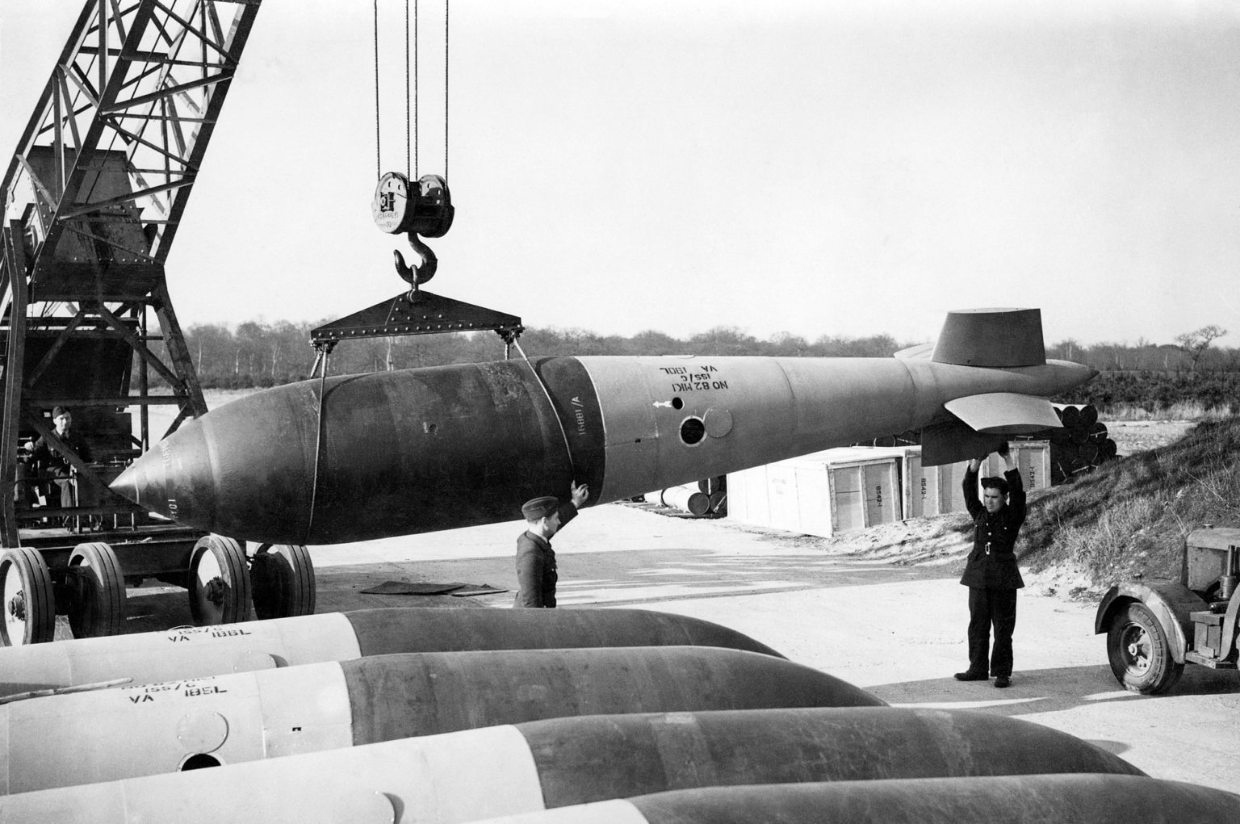
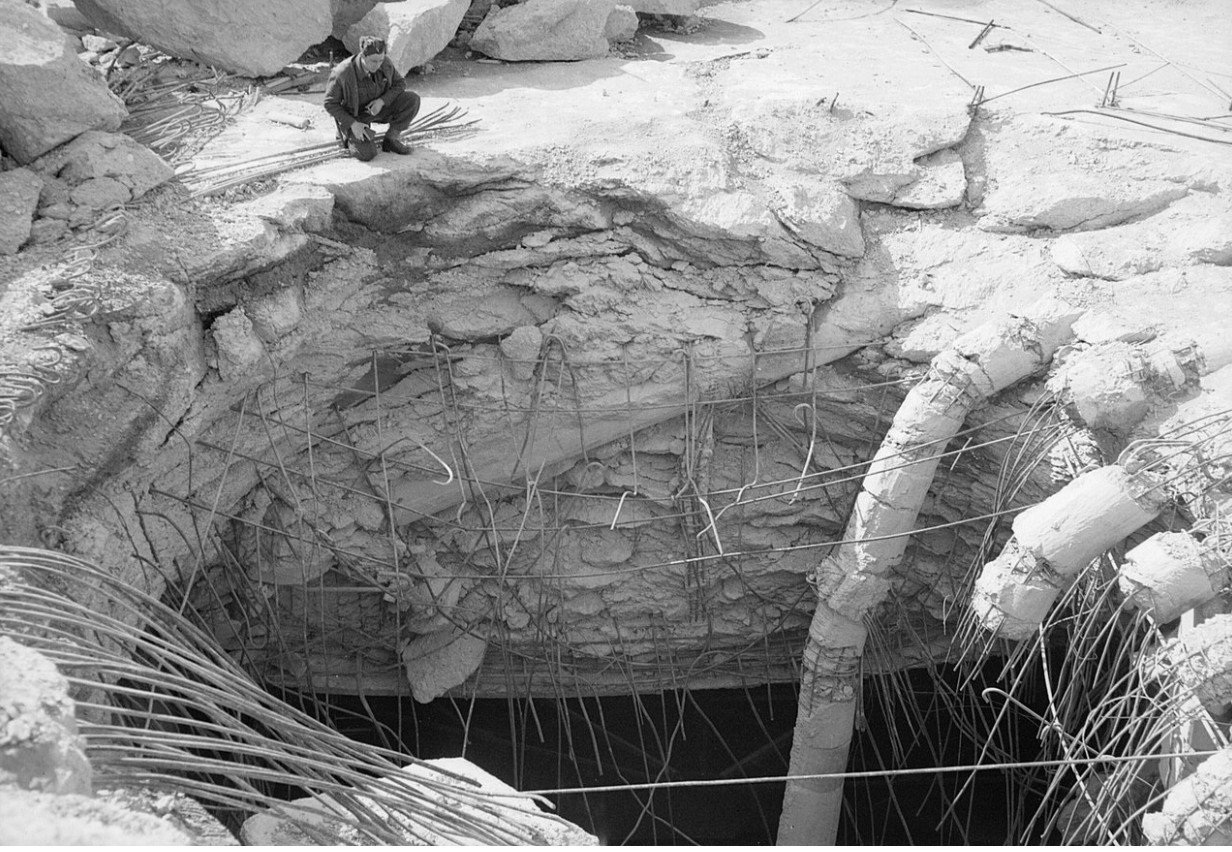
Bordeaux had been bombed by the RAF in 1940 and 1941 with little result. As the war went on two new bombs were developed to penetrate comprehensive landed defences. The Tallboy and Grand Slam weapons, of 12,000 lbs and 22,000 lbs, reached supersonic speeds as they fell, penetrating a target or the ground before exploding. A near-miss was effective, as the shockwaves travelling through the ground caused enough of a quake, to inflict damage. These formidable devices, the most devastating developed before the atomic bombs, needed the improved Lancaster B. Mk 1 (Special) to carry them due to their weight. Meanwhile, the USA developed the radio-controlled “Bat” guided bomb and the 4500 lb Concrete Piercing/Rocket Assisted “Disney Bomb.”
The “happy times” of the U-boats had come to an end. The first, from July to October 1940, had been followed by a second from January to August 1942. Axis submarines sank 609 ships for a loss of 22 U-boats before their attacks were able to be countered. The second time was largely a result of inexperienced mariners and naval captains operating from the American coast.
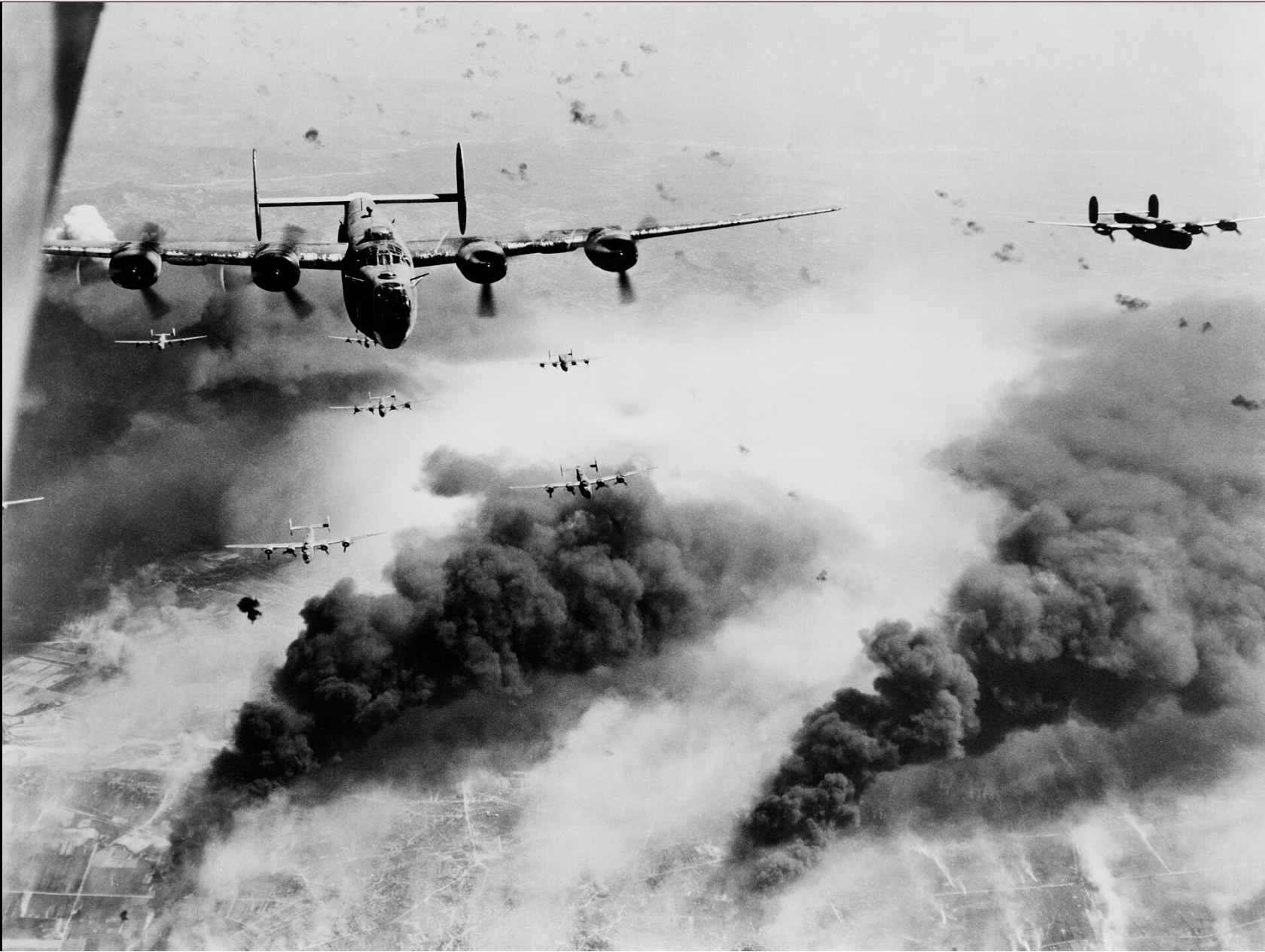
On 17 May 1943, Bordeaux base was attacked by an air strike that dropped 198 bombs from United States Eighth Army Air Force B-24 Liberators. The U-boat bunker was hit but suffered only superficial damage. The raid caused considerable damage to the harbor and killed 195 Spanish slave-labourers, who had been captured by the Germans in the Spanish Civil War. The base however was largely protected by its concrete roof.
As the Axis were pushed back following D-Day the pens were abandoned one by one. Post-war they caused a problem – how do you get rid of such enormous concrete structures? Mostly they were abandoned, although some were dismantled.
A pen built in Brest, France, is still in use today. Completed in 1941, the pen did not receive a lot of damage in the war, largely because the town was so heavily bombed workers could not be accommodated. Brest is still a submarine base, now serving the French Navy, and the bunker is still in use.
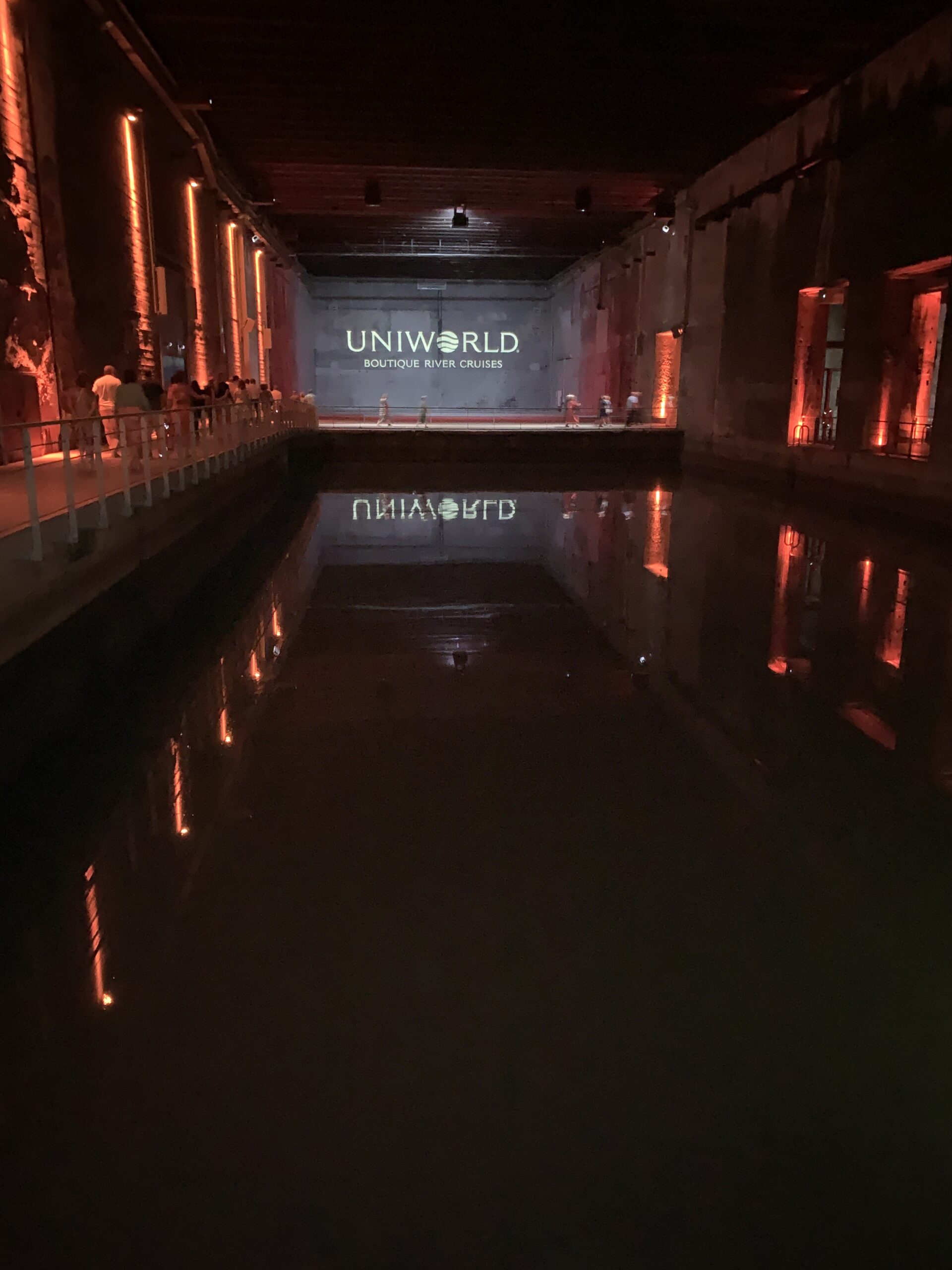
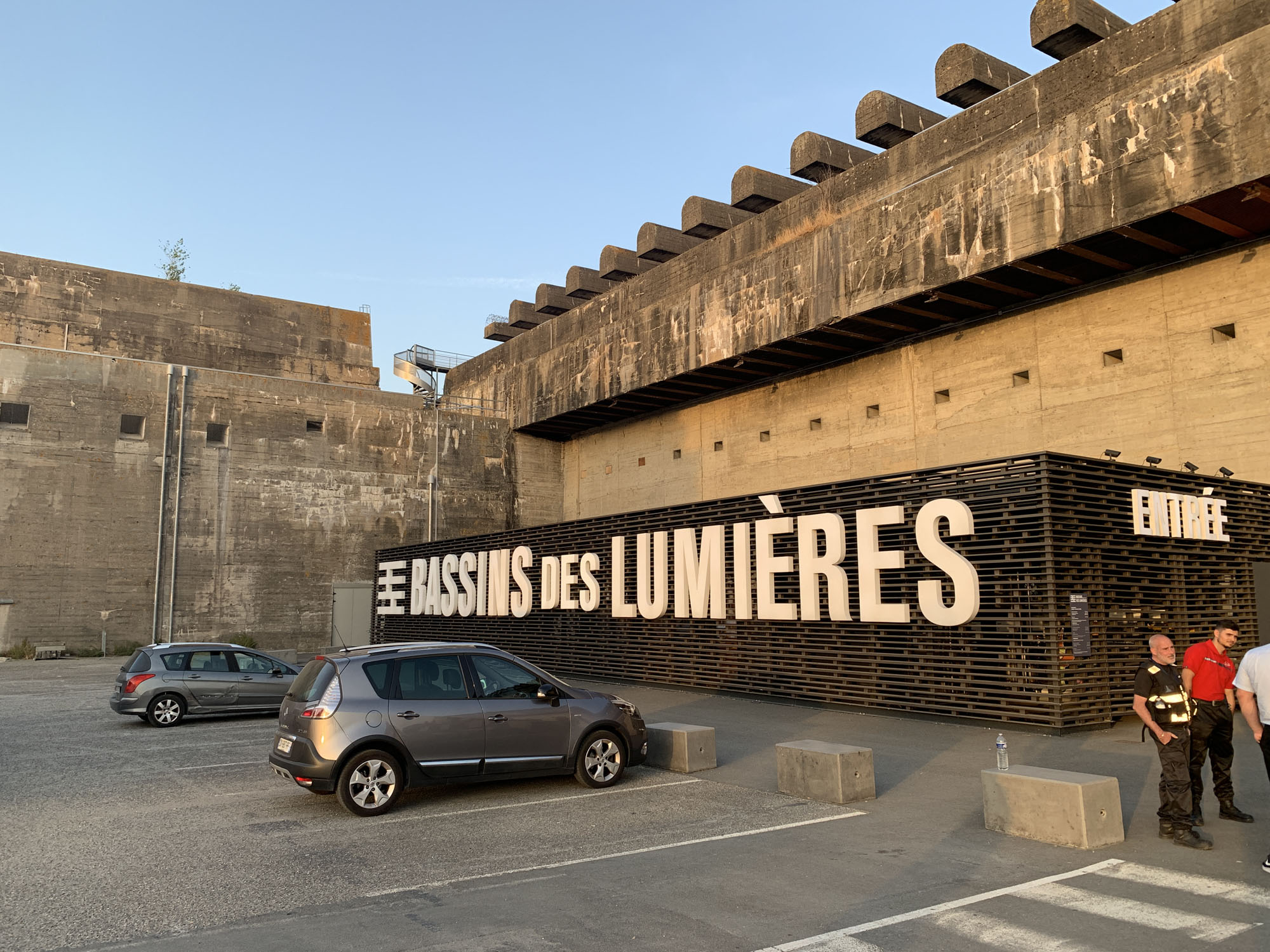
From 1993 a gradual clean-up of the Bordeaux base was carried out, and in 2018 it was opened as a performance space. The bare walls and some of the water-filled docks remain, with seating spaces made in some of the dry areas. Huge projectors project images on the interior walls to the accompaniment of music. Although people say it’s worth the money if you are interested in the unique submarine pens of WWII, you will certainly be impressed by what you see at Bordeaux.
-o-o-O-o-o-
Dr Tom Lewis is a military historian. His latest book is The Secret Submarine, detailing how I-178, a Japanese fleet submarine, was sunk with its 86 crew by two RAAF bombers off NSW in 1943. His work The Sinking of HMAS Sydney has just been awarded the Commodore Sam Bateman Book Prize by the Australian Naval Institute.




Contact MHHV Friend about this article.