Which were the key battles Australians were fighting in?

What impact did Australia have on the Allied strategic position? How did returning Australian veterans shape Australian society, and how did they want the war to be remembered? What role did Australians play in the transition from Japanese occupied South East Asia to the postwar world? How did the experience of the conflict shape the Australian Army, RAN and RAAF?
Opening Remarks
Major-General Jim Barry AM, MBE, RFD, ED (Rtd), MHHV Patron
Gen Jim Barry opened the conference by noting that when Professor Geoffery Blainey had presided over the inception of the MHHV he had exhorted the committee to be relevant. In reviewing the MHHV’s history, Gen Barry noted that this was the 23rd MHHV conference of which the current conference was the 17th one day conference. On that evidence alone the MHHV had proven relevance. He also thanked the sponsors, History Guild and Echo Books
Keynote address.
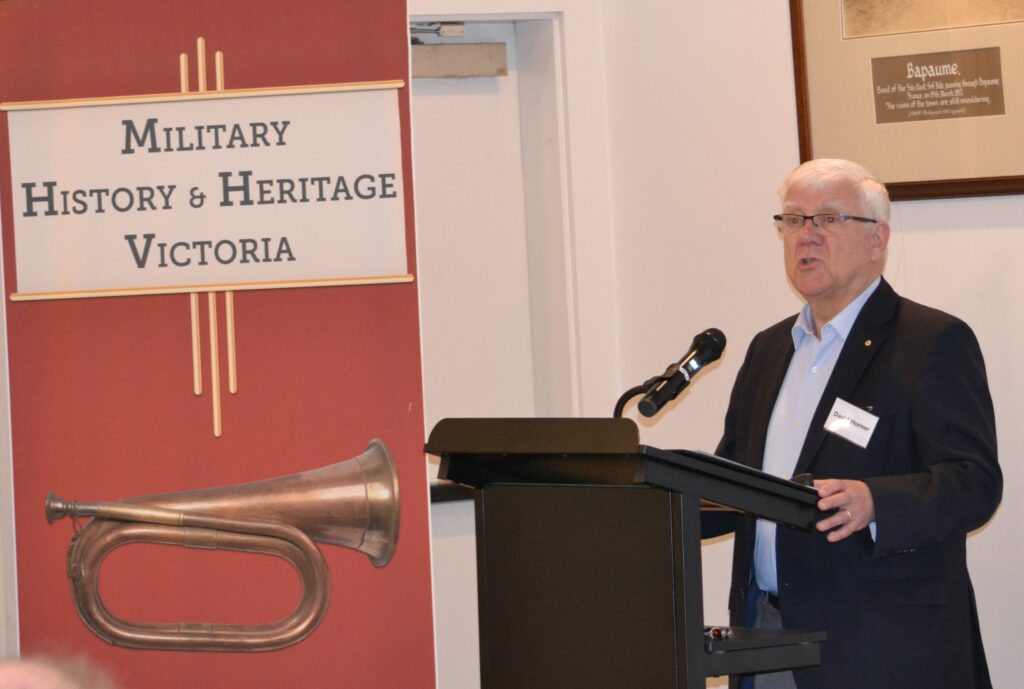
Professor David Horner
Prof Horner reminded the audience that Australia’s last year of war has attracted much uninformed criticism. He pointed out that at the time Australia’s forces were committed to ‘mopping up’ in 1944 the consensus was that the war would continue for another two to four years. The political decision taken by General MacArthur was that Australia would maintain 6 divisions in the rear areas. The Australian government agreed as they believed that it would give Australia a part in the post war hierarchy. This proved correct as it gave Australian forces a role in the occupation of Japan and later military actions.
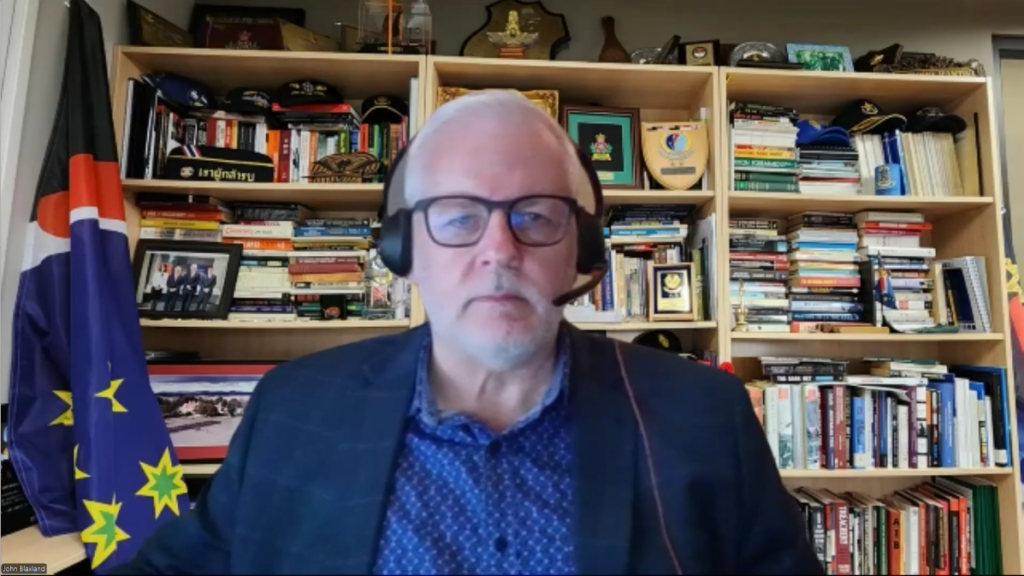
The advances of the Japanese south to potentially threaten Australia raised existential issues not experienced in Australia before. It required Australia to bulk up its armed forces unsustainable levels not seen before or since.
He noted that the capture of Guadalcanal from the Japanese by the Americans was the most consequential event in Australia’s war. With American resources released, the Australian mainland was no longer in danger. More than that it drove a shift in Australia’s allegiance to the new power in the Pacific with a decline in engagements alongside the British. Britain’s influence rapidly declined and was largely extinguished when the UK joined the EEC in 1970.
To Buin: Australians in South Bougainville, 1945 – Dr Karl James
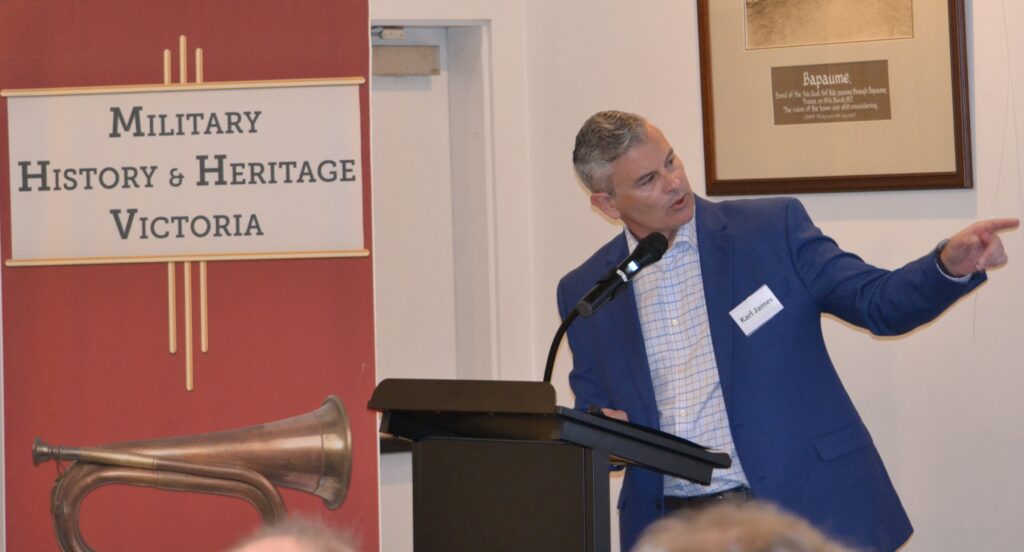
No satisfactory reason has ever been given for mopping up in the islands of New Guinea. From the Australian perspective, New Guinea was Australian territory and the native inhabitants needed to be protected from the cruel treatment they suffering from under the Japanese.
Retaking Buen was one of the largest and longest mopping up actions mounted by Australia. Around 43,000 Australians served and some 500 were killed fighting against over 45,000 Japanese. The fighting was arduous as it was found that planes, tanks and artillery made little impact on Japanese numbers. Vigorous patrolling by infantry with rifles and steadily evolving off track tactics proved to be the key.
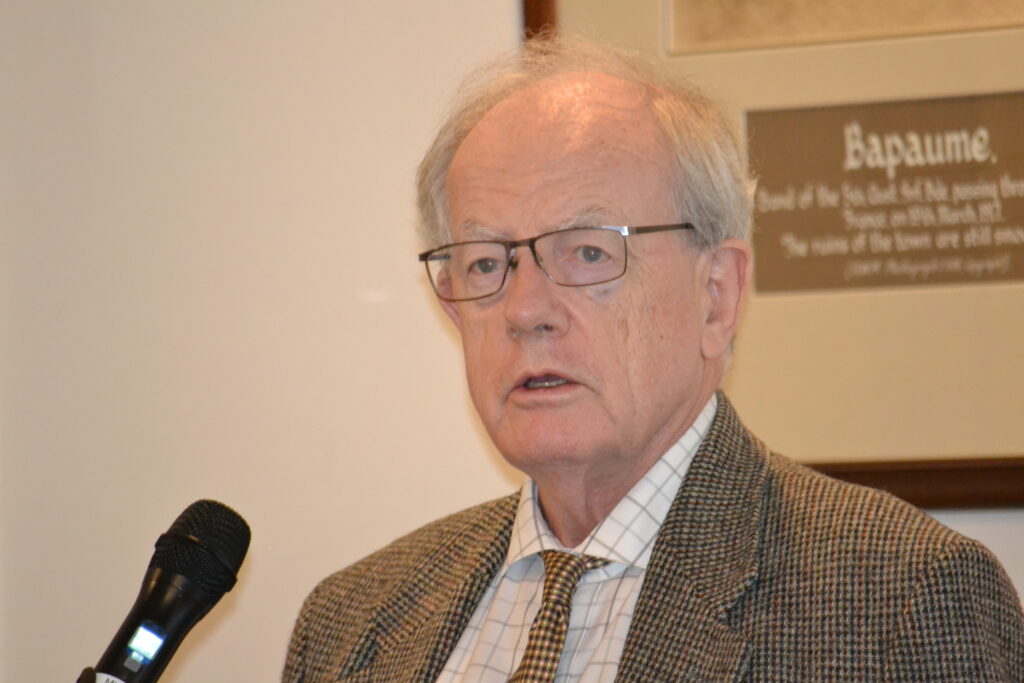
The incredible exploits and bravery of Pvt Edward Kenna VC were discussed in detail. The speaker went on to discuss the structure of brigades and the great improvement in combined arms and skills during the war.
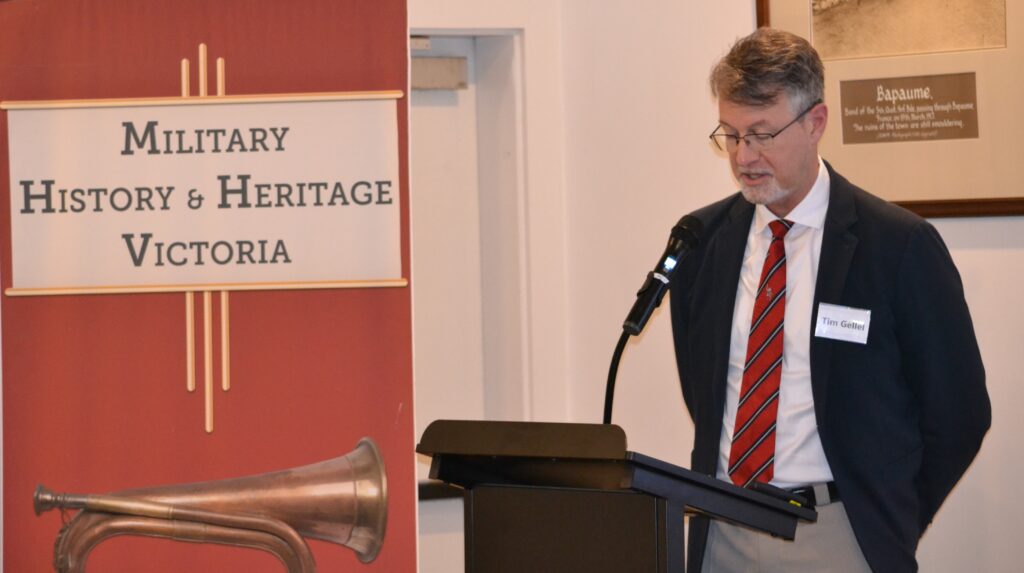
After hearing the fearsome fighting reputation of the Japanese soldiers, General Douglas MacArthur was shocked to find the road to Tokyo lined with soldiers with their backs to him as he drove for his first interview with the Japanese Emperor. There was a precedent for such acquiescence from the previously aggressive foe. On May 3 1945 Lieutenant Colonel Takenaga surrendered to the Australian Army in eastern New Guinea. When questioned Takenaga agreed that the Japanese would surrender if the Emperor decreed it. This incident led to the realisation that a bloodless Japanese surrender was an option if handled correctly.
1945 – the Viewpoint of Japanese Veterans – Dr Peter Williams
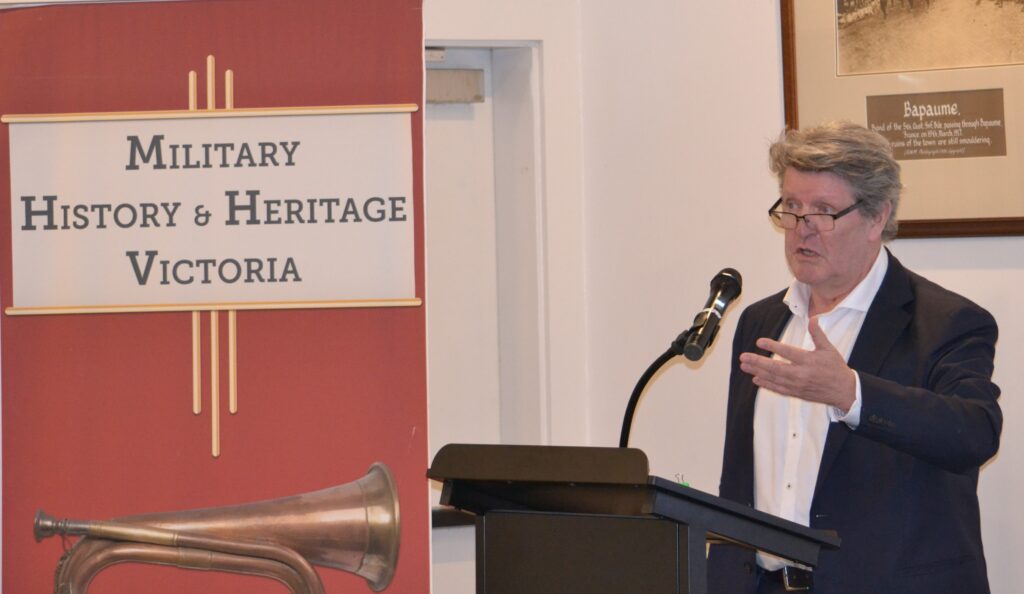
The attitude of Japanese servicemen was not always to fight to the end. And at the end of the official end of hostilities, many were prepared to believe messages dropped from planes that the war was over. Others were much more difficult to influence and fought on into 1946 and sometimes beyond. Eventually 150,000 Japanese were convinced to surrender and many were interned in Australian prison camps.
The attitude of Japanese soldiers to Australian soldiers was that they were weak for using too much artillery and never charging in attack.
Aitape – Wewak: Casualties and Controversies – Dr Jan McLeod
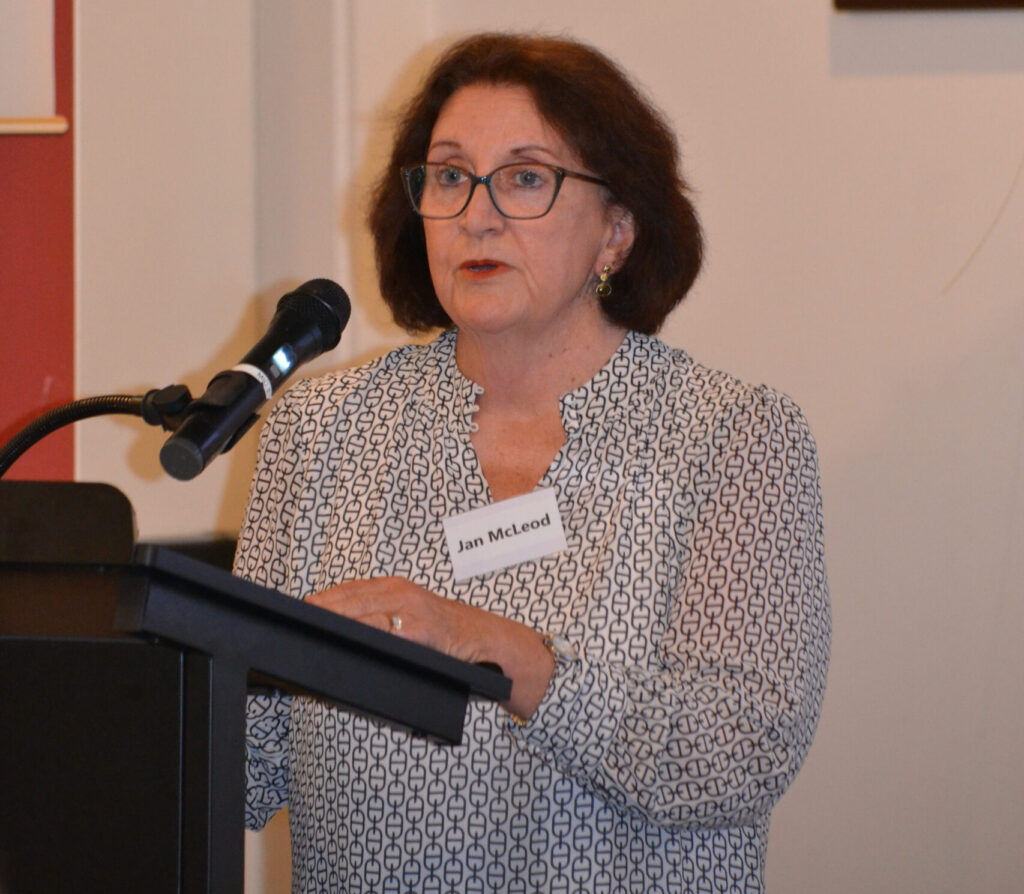
Malaria was a critical problem in New Guinea. While it rarely killed malaria accounted for 38% of the 16,000 disease casualties. With the supply to quinine blocked by the Japanese a new drug, Atebrin, was brought into play. Much trial and error went into optimising its effects. The most effect was to ensure soldiers took their proscribed dose daily and the only way to ensure that is for officers administered the drug. To fall sick with malaria was considered as a self-inflicted wound.
Results were spectacular but didn’t last. As incidence of malarial infection grew the chief doctor became frantic. The men and officers were blamed. This went on until it was realised there were another strain of malaria that Atebrin did not cover and other solutions put in place.
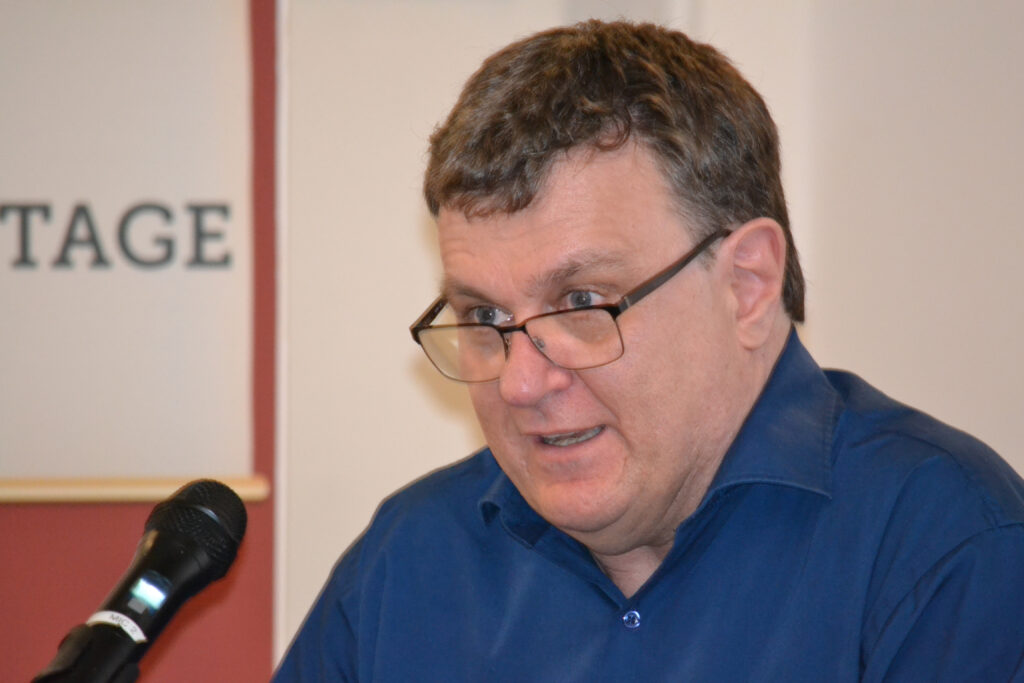
Naturally enough, families expect to be told of the disappearance of their loved ones and of their circumstances and condition. All too often however the circumstances aren’t known or the death or otherwise not certain.
The situation is difficult enough during the war but people often accept that there are circumstances that prevent information being transmitted. But consternation grows at the end of the war if the information fails to reveal the location and condition of their loved ones. People frequently don’t believe that loved ones simply disappear.
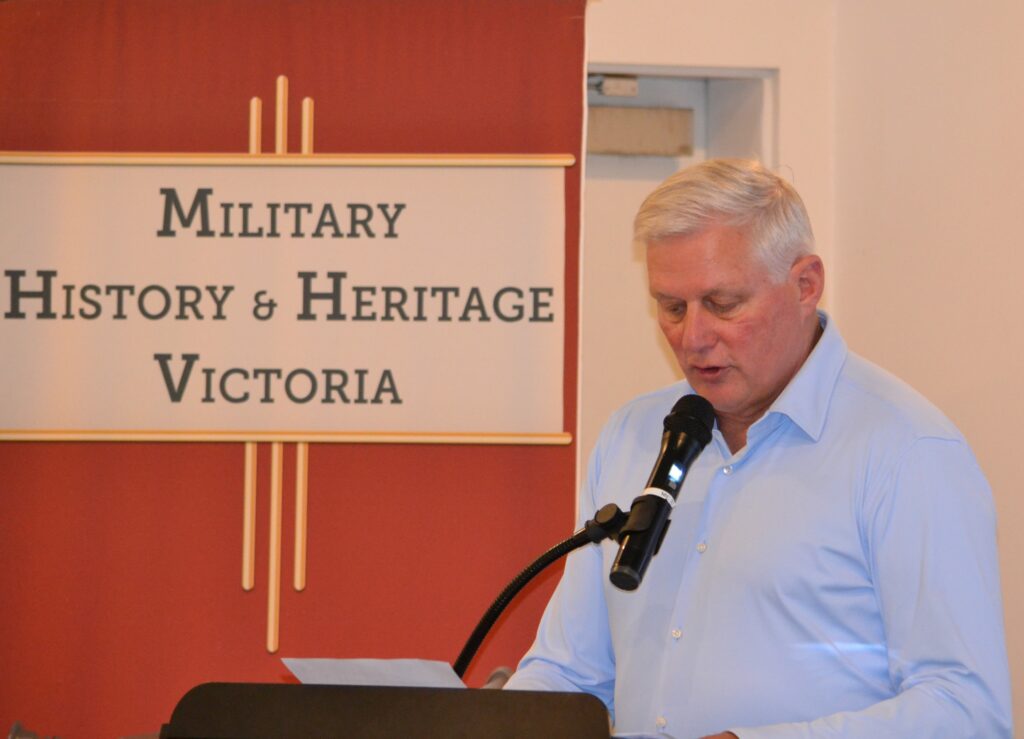
The Japanese invaded the Dutch East Indies from March 1942. 4 million people died in the occupation, of which 30,000 were Europeans. Some of the officials escaped and set up a government in exile in Australia and tried to win it back at the end of the war.
Repatriation of the 300,000 defeated Japanese was a low priority and was delayed by lack of shipping. Some Japanese took sides with Indonesians while a greater number fought under arms with the British to bolster colonial power but ultimately failed. The Dutch ceded independence in 1949.
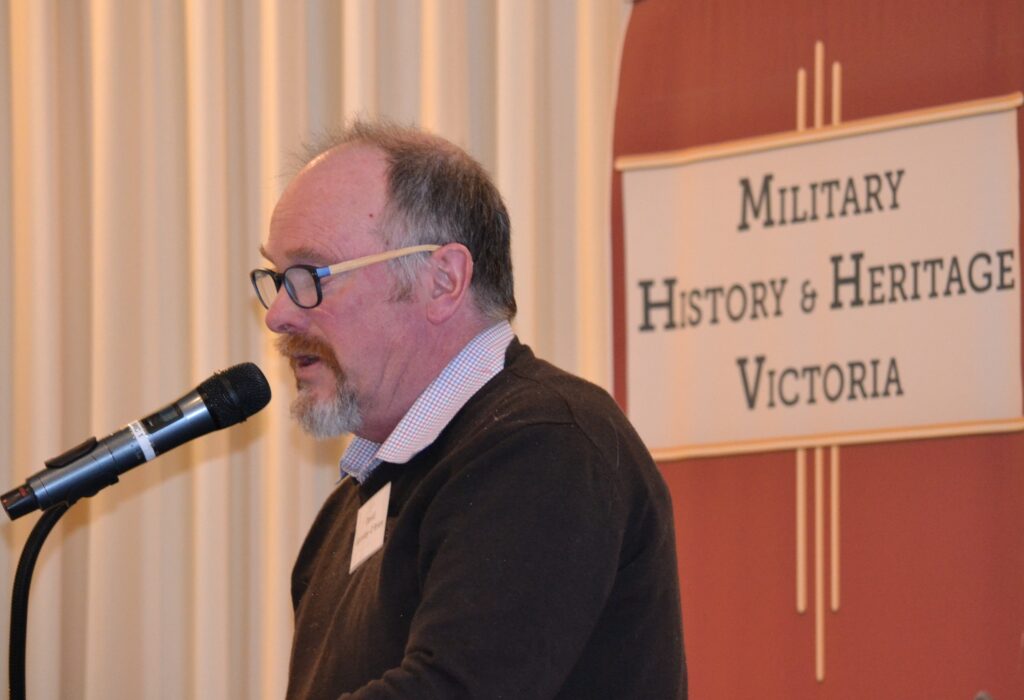
The island of Morotai became an important allied base following its capture from Japanese forces in September 1944. The Australians set up a base there and Blamey accepted the Japanese surrender on Morotai 9 September.
Also on the base was an internment camp containing some Japanese who were known to have committed atrocities. One of these was a relatively lowly Japanese officer who had been ordered to by his superiors to organise the execution of 4 allied airmen. These airmen had been tied to stakes and each stabbed to death by different untried soldiers. It was decided to try and then execute the junior Japanese officer charged with the killings. This somewhat makeshift processes became the template for further executions on the island.
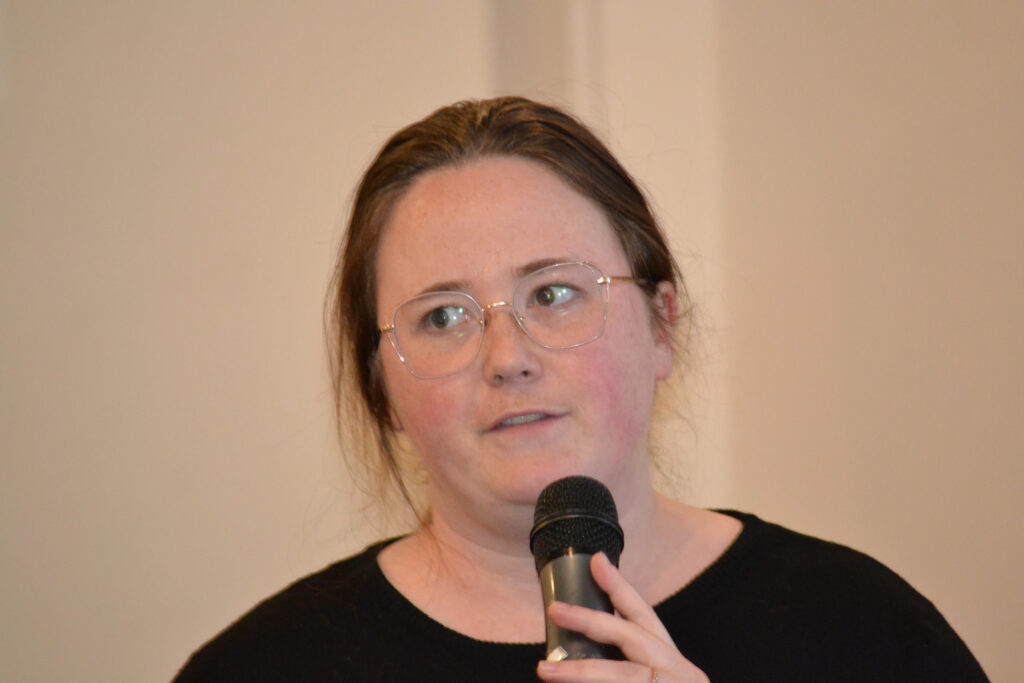
Australia was a prolific builder of memorials following WW1. Dr Townsend puts the number at more than 4,000 and considers them to be used as surrogate graves because the dead remain overseas.
The memories of the dead of WW2 were either grafted onto WW1 memorials or commemorated by public facilities such as named pools. Veterans are overlooked by the latter process and fear being forgotten. The Rats of Tobruk overcame this problem by forming an association of over 8,000 members for expressing their unique identity. This has served them well and have managed to keep a dominant position in the fading memories of the nation.
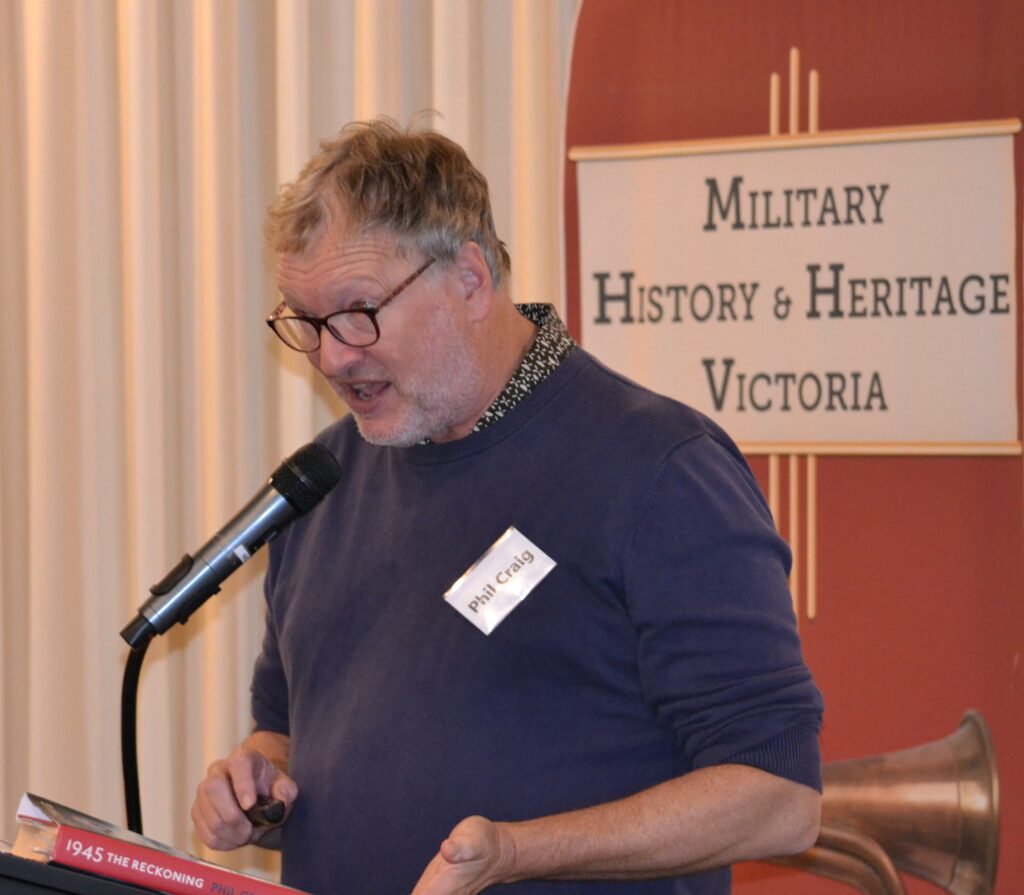
The old empires worked together to try to get back what they lost in the war. The British assisted the Dutch in the East Indies and the French in Vietnam. The British also had their own troubles in India and other parts of their empire. None of the efforts were ultimately successful.
In the case of Vietnam the old empire nations armed against the forces of Ho Chi Minh despite Eisenhower’s support of the revolutionary leader. Unfortunately Eisenhower died before he could make the critical difference and Truman supported the war against Ho Chi Minh’s side with the effect of drawing Australia into the conflict. Ultimately Ho Chi Minh led a united Vietnam.
Download the Full Program here
Fighting to the Finish: Australia in 1945 – Strategy, Victory and Legacy
Saturday 11 October 2025 (Caulfield RSL, Elsternwick)
SESSION ONE | Keynote
Welcome
Opening of the Conference
Major-General Jim Barry AM MBE RFD ED (Rtd) MHHV Patron
Session Chair Lieutenant Colonel Murray Duckworth, CSM
MHHV Vice-President, Introduction of Keynote Speaker
Keynote Speaker: Emeritus Professor David Horner AM, FASSA
SESSION TWO | After Total War: What’s Next?
Session Chair Jason McGregor
MHHV Secretary
SESSION THREE | The Final Battles
Session Chair Lieutenant Colonel Michael Buckridge RFD (Rtd) MHHV President, Conference Co-Convenor
To Buin: Australians in South Bougainville, 1945 – Dr Karl James
1945 – the Viewpoint of Japanese Veterans – Dr Peter Williams
SESSION FOUR | Casualties
Session Chair: Colonel Marcus Fielding (Rtd)
Aitape – Wewak: Casualties and Controversies – Dr Jan McLeod
SESSION FIVE | Consequences and Retribution
Session Chair: Mr Brent Taylor
SESSION SIX | Legacy
Session Chair: Mr David Phillipson
Conference Co-Convenor
Closure of the Conference – Major-General Jim Barry AM MBE RFD ED (Rtd), MHHV Patron

Review by Brent D Taylor and Jason McGregor
Contact Brent D Taylor about this article.